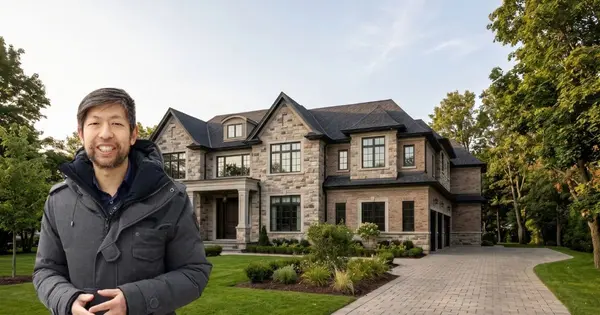
High-End Homes in York Region: What Actually Changes at the Upper End
It is not service or networks. It is sample size. Fewer comparable sales, a smaller buyer pool, pricing that honestly produces a range rather than a figure, and a discretion trade that is usually priced dishonestly.

Written by a Richmond Hill and Markham Real Estate Expert
Most pages on this subject sell discretion and global networks. Kirby Chan & Co. Real Estate Team works across Richmond Hill, Markham and Thornhill, including the prestige pockets and condominium addresses where we have published our most widely read work, and the honest account of what changes at the upper end is less flattering than the usual pitch. It is that the market gets thin, which makes pricing harder and timelines longer. This page explains what follows from that, including the parts that are inconvenient for us.
Buying or Selling at the Upper End in York Region?
Call Our Dedicated Real Estate Hotline
416-305-8008
We will tell you when the comparables are too thin to be confident
Quick takeaway: There is no price at which a home becomes luxury, and anyone quoting a threshold is describing their marketing. What matters is whether a property sits in the thin part of its market: few genuinely comparable sales, few buyers at that level at any one time, and a longer expected marketing period. Three things follow. Pricing honestly produces a range rather than a figure, and sometimes the sample cannot support a conclusion at all. Longer time on market is a characteristic of a thin market rather than automatic evidence of a wrong price. And an off-market or exclusive listing is a decision to accept a potentially weaker price in exchange for privacy, because restricting exposure does not increase competition. Choose it for privacy, not for price.
What This Guide Covers
1. What Actually Changes at the Upper End
Start Here Not Price. Sample Size.
Most pages about high-end real estate talk about service, discretion and global networks. The thing that actually changes above a certain level is far less glamorous and far more consequential.
The market gets thin. Fewer sales, fewer buyers at any given moment, and properties that are less like one another. Everything else on this page follows from that single fact.
Which means pricing is harder, because pricing works by comparison and comparison needs a sample. Time behaves differently, because a smaller buyer pool takes longer to produce an offer. And a regional or even a community figure becomes useless, because the pocket is the market and the pocket may have had very few sales.
We are not going to define a price threshold for you, and you should be sceptical of anyone who does. There is no number at which a home becomes luxury. What there is, is a point at which your property sits in the thin part of its market, and that depends on the lot, the community, the housing type and how unusual the house is rather than on a price label.
A home can be the most expensive on its street and still have plenty of comparables. A modest-looking house on an unusual lot can have almost none. The second one is the harder transaction, whatever either is worth.
So the first question is not what band you are in. It is how many genuinely matched comparable sales exist for your property, and the answer to that changes how everything else should be handled.
2. Pricing With Few Comparables
The Honest Version Wider Uncertainty, and Sometimes No Conclusion Available
Pricing a home means finding recent sales of genuinely similar properties and reasoning from them. The quality of that reasoning depends entirely on the sample.
At the upper end three things degrade the sample at once. There are fewer transactions overall. The properties are less alike, because a bespoke renovation, an architect-designed build or an unusual lot can make a home close to unique. And each individual comparable therefore carries more weight, so one unrepresentative sale distorts the picture more than it would lower down.
The consequence that nobody enjoys hearing. The honest output is sometimes a range rather than a figure, and occasionally the honest output is that the sample cannot support a confident conclusion at all.
An agent who produces a precise number with total confidence on three thin comparables is not being more competent. They are overstating what the data can carry, and the cost of that lands on you as a reduction weeks later.
What good practice looks like here. Each comparable shown to you individually, with the address or at least the street, what it originally listed at, what it sold for and how long it took. Then an explicit statement of how confident the figure is and why. Then what would change the view.
Our guide to reading the housing market yourself explains why a regional average is the least useful figure available and what to read instead. That applies everywhere and it applies hardest here.
3. Time Behaves Differently, and That Is Not a Price Problem
A Thin Market Is a Slow Market Compare Against Similar Properties, Not the Wider Market
At any given moment there are fewer households able and willing to transact at the upper end, and that changes the shape of a sale.
Those buyers are frequently not in a hurry. They often have somewhere acceptable to live, they are usually choosing between quite different properties rather than similar ones, and the decision is discretionary in a way that a first move or a growing family's move is not.
So longer time on market at this level is a characteristic rather than a symptom. Which produces a practical instruction: compare days on market against similar properties in similar pockets, never against the wider municipal figure, because the wider figure is built mostly from faster-moving housing.
Where that cuts against the seller. It means planning the timeline and the carrying costs honestly before launch rather than discovering them in month four, and it means being clear in advance about what you will and will not do if nothing happens for a while.
And where it cuts against the easy diagnosis. At this level, showings without offers does not automatically mean the price is wrong, which is the usual reading lower down. It can equally mean the right buyer has not arrived yet. Distinguishing those two is a judgement call about the specific pocket and it is one of the places experience genuinely matters.
What you want from an agent is the distinction being made explicitly, with reasons, rather than a reflexive push to reduce or a reflexive instruction to wait.
Want the Comparables for Your Pocket Rather Than Your Municipality?
Call Our Dedicated Real Estate Hotline
416-305-8008
Each one shown individually, with its listing history
4. Where the Upper End Actually Is in York Region
Pockets, Not Municipalities
We are not going to rank neighbourhoods or name a best one, because the honest framing is different and more useful: the upper end of this market is concentrated in particular pockets, and each behaves as its own market with its own comparable set.
Established areas with larger lots and mature streetscapes. These carry a premium that comes from land, trees and street character rather than from finishes, which means a dated house on a prime lot and a renovated house on an ordinary lot are not the same asset even at the same price.
A small number of prestige condominium addresses. At the upper end of the condominium market a specific building is the market, not the municipality and not even the corridor, so comparables come from that address and its closest peers. Our content on the Royal Orchard and Royal Bayview addresses covers that in detail and is the most read work we have published.
Newer estate-style enclaves, where the stock is more uniform, which paradoxically makes pricing easier than in older prestige pockets because the comparables are more alike.
And individual streets inside otherwise ordinary communities, which are the ones most often mispriced in both directions, because a municipal or community figure buries them completely.
Richmond Hill, Markham and Thornhill each contain several of these, and our guide to Richmond Hill neighbourhoods sets out why the pocket rather than the municipality is the unit that matters when you are comparing anything.
5. Marketing: What Matters and What Is Theatre
Higher Standard, Same Substance And One Claim to Push Back On
The marketing fundamentals do not change at the upper end. What changes is that there is less margin for getting them wrong, because a weak launch in front of a small buyer pool wastes a larger share of your total available attention.
What genuinely matters. Photography that does the property justice rather than flattering it into something it is not. Floor plans and accurate measurements, which matter more as homes get larger and less conventional. A presentation that explains what is actually unusual about the property, since at this level the distinguishing features are frequently not obvious from photographs. And reaching the real buyer pool, which requires knowing who that is.
What is largely theatre. The claim that a private international network will produce a buyer that broad exposure would not. Occasionally a genuine off-market relationship matters. Usually that claim is a way of describing ordinary marketing in more impressive language, and the test is simple: ask what specifically in the plan is different because of this property, and who the likely buyer is. If the answer would be identical for any home at that price, it is not a plan.
And the launch question that applies everywhere. A new listing gets its largest burst of attention immediately, from the people already watching that segment. At the upper end that audience is small, so spending it on photography that was not ready, or on a price nobody will engage with, is more costly than it is lower down.
Our complete guide to selling in Richmond Hill covers the launch sequence in full.
6. Privacy and Discretion, Priced Honestly
A Legitimate Choice With a Real Cost Restricting Exposure Does Not Increase Competition
Discretion comes up more at this level than anywhere else, and it is worth separating the legitimate version from the sales pitch.
The legitimate version. There are real reasons a household may not want their home publicly marketed or openly shown: personal safety, a confidential family or business situation, who lives there, or simply not wanting neighbours and colleagues to know. Those are sufficient reasons and nobody should have to justify them further.
The cost, stated plainly. Limiting who sees a property limits the number of buyers who can compete for it, and competition is what produces the strongest price. So an off-market or exclusive arrangement is normally a decision to accept a potentially weaker price in exchange for privacy and control.
Which is a perfectly rational trade when privacy is the reason. It is not a rational trade when it is presented as a route to a better price through a private network, because restricting exposure does not normally increase competition. If an agent proposes it on that basis, ask them to explain the mechanism.
And there is a middle course most sellers are never offered. Full exposure with controlled access: no open houses, appointment-only showings with qualification requirements, limited interior photography of private areas, and specific instructions about what is and is not published. That preserves the competition while addressing most of the privacy concern.
Whatever route you choose, get the arrangement in writing and have your lawyer look at the agreement. The terms of an exclusive arrangement are the whole substance of it.
7. The Practical Differences Buyers Hit
Four Things That Behave Differently on a High-Value Purchase
Financing takes longer and asks more. Expect more documentation, more scrutiny of income and assets, an appraisal on the lender's terms, and a longer timeline than a conventional purchase. Build that into the conditional period rather than discovering it late, and talk to a mortgage professional before you offer rather than after.
Appraisal risk is higher, for the same reason pricing is harder. With few comparables, an appraiser can reach a different view from the agreed price, and on a financed purchase that becomes your problem. A mortgage professional can tell you how exposed you are.
Due diligence is broader. Larger and more unusual properties carry more to examine: pools, wells and septic systems on larger lots, specialised mechanical systems, conservation or ravine considerations, easements and boundary questions on irregular lots. Where a boundary is in play, title insurance is not a substitute for a survey, which our guide to title insurance in Ontario explains.
Insurance is not automatic. High-value, heritage, or unusually constructed properties are not always straightforward to insure, and a quotation is worth obtaining during the conditional period rather than assuming.
And competing offers still happen at this level, less often but with more at stake. Our guide to competing offers in Ontario covers how to approach that without waiving protections you will regret.
8. What to Ask Any Agent Before You Hire Them
Seven Questions, and the First One Is the Test
1. How many properties in this price band and in this specific pocket have you handled in the last two years, and how many were listings rather than buyer side. Ask for the number.
2. Show me the comparables behind your opinion of value, each one individually, with the original asking price and how long it took to sell.
3. Is the sample large enough to support a conclusion, and how confident is the figure. An agent willing to say the sample is thin is giving you better information than one who is not.
4. Who is the likely buyer for this specific property, and what in your plan is different because of that answer.
5. What would you do if we are two months in with interest but no offers, and how would you tell the difference between a price problem and a thin market.
6. If discretion matters to me, what are my options and what does each one cost me in competition.
7. Who on your team handles pricing, showings and negotiation, and will I meet them before I sign. Our guide to choosing a real estate agent sets out nine questions to put to everyone you interview, including us.
9. Seven Mistakes
All Seven Are Common and All Seven Are Avoidable
1. Hiring on the highest opinion of value. At this level the sample is thin enough that a confident high number is easy to produce and expensive to be wrong about.
2. Using a municipal or community figure. The pocket is the market, and often the street is.
3. Reading a long marketing period as a price problem by default. In a thin market it may not be, and the distinction needs reasoning rather than reflex.
4. Accepting an off-market arrangement on the promise of a better price. Restricting exposure does not normally increase competition. Choose it for privacy, with the cost understood.
5. Treating a private network claim as a plan. Ask what is specifically different about the plan for this property.
6. Leaving financing and appraisal risk to the end. Both take longer and carry more risk at this level.
7. Skipping a survey on an unusual or irregular lot because title insurance is in place. It does not do what a survey does.
Recognition
Kirby Chan Awards and Achievements
🏆 2026 Platinum Award, Real Estate Agent, Markham
🏆 2026 Platinum Award, Real Estate Broker, Markham
🏆 2026 Platinum Award, Real Estate Agent, Vaughan
🏆 2026 Platinum Award, Real Estate Broker, Vaughan
🏆 2026 Platinum Award, Real Estate Agent, Brampton
🏆 2026 Platinum Award, Real Estate Broker, Brampton
🏆 #1 Individual Producer in Ontario for eXp Realty 2024
🏆 Top 3 Best Rated Real Estate Agent in Richmond Hill
🏆 Toronto Star Platinum Award for Best Real Estate Agent
🏆 Top Real Estate Agent Award in Markham
🏆 2X ICON Agent Award with eXp Realty
🏆 2025 Community Votes Platinum Award, Thornhill
🏆 2024 Community Votes Platinum Award, Thornhill
🏆 2023 Community Votes Platinum Award, Thornhill
🏆 2025 Gold Award for Real Estate Brokers in Markham
🏆 2024 Community Votes Bronze Award, Richmond Hill
Frequently Asked Questions
What counts as a luxury home in Richmond Hill or Markham?
There is no fixed threshold, and anyone quoting one is describing their own marketing rather than a market definition. What matters is not a price label but whether a property sits in the thin part of its market, meaning there are few genuinely comparable sales, few buyers at that level at any given time, and a longer expected marketing period. A home can be the most expensive on its street without being in that position, and a modest-looking property on a large or unusual lot can be squarely in it. The practical test is how many matched comparables exist, not what the price is called.
Why is pricing a high-end home harder?
Because the sample is small. Pricing works by comparison, and comparison requires enough recent sales of genuinely similar properties to establish a pattern. At the upper end of any market there are fewer transactions, the properties are less alike, and a bespoke renovation or an unusual lot can make a home nearly unique. That means wider uncertainty, more weight on each individual comparable, and a real possibility that there are too few sales to support a confident conclusion. An agent who states a precise figure with complete confidence on a thin sample is overstating what the data can carry.
Does a high-end home take longer to sell?
Generally yes, because the buyer pool is smaller. At any given moment there are fewer households able and willing to transact at that level, and those buyers are frequently not in a hurry and are often choosing between very different properties rather than similar ones. Longer time on market at the upper end is a normal characteristic of a thin market rather than evidence that a price is wrong, which is why days on market at that level should be compared against similar properties rather than against the wider market. It also means a seller should plan the timeline and the carrying costs honestly before launching.
Should I list my high-end home as an exclusive or off-market listing?
That is a real choice with a real cost and it should be made for the right reason. Limiting who sees a property limits the number of potential buyers who can compete for it, and competition is what produces the strongest price. So an off-market or exclusive arrangement is usually a decision to accept a potentially weaker price in exchange for privacy, discretion or control over access. Where privacy genuinely matters, for safety, for a confidential situation, or because of who lives there, that trade can be entirely rational. Where it is presented purely as a route to a better outcome through a private network, ask to see the reasoning, because restricting exposure does not normally increase competition.
What should I ask an agent about their high-end experience?
Ask for the number, not the claim. How many properties in this price band and in this specific community have you handled in the last two years, and how many were listings rather than buyer side. Then ask to see the comparables behind their opinion of value, with what each one originally listed at and how long it took to sell, and ask directly whether the sample is large enough to support a conclusion. An agent who will say the sample is thin is being more useful than one who will not. Finally ask who on the team handles pricing, showings and negotiation, and whether you will meet them before signing.
Where are the high-end neighbourhoods in Richmond Hill and Markham?
Rather than a ranking, the useful framing is that the upper end of this market is concentrated in particular pockets with distinct characteristics: established areas with larger lots and mature streetscapes, a small number of prestige condominium addresses, newer estate-style enclaves, and individual streets within otherwise ordinary communities. Richmond Hill, Markham and Thornhill each contain several. The important point for a buyer or seller is that these pockets behave as separate markets with their own comparable sets, so a figure for the municipality or even the community is not the figure for the pocket.
Is marketing different for a high-end home?
The substance is the same and the standard is higher. Photography, floor plans, accurate measurements, a clear presentation of what makes the property unusual and a listing that reaches the actual buyer pool matter more when there are fewer buyers, because there is less margin for a weak launch. What is largely theatre is the claim of a private international buyer network producing a result that broad exposure would not. Ask any agent what specifically in their plan is different because of this property and who the likely buyer is. If the plan would be identical for any home at that price, it is not a plan.
Who can I talk to about a high-end property in York Region?
Kirby Chan is a Broker with Kirby Chan and Co. Real Estate Team at eXp Realty, serving Richmond Hill, Markham, Thornhill, Vaughan and York Region. The team prices from matched comparables within the specific pocket rather than from a municipal or community average, shows those comparables with their original asking prices and days on market rather than summarising them, and will say plainly when the sample is too small to support a conclusion, which at the upper end happens more often than sellers are usually told. Legal questions go to a lawyer, tax questions to an accountant and financing questions to a licensed mortgage professional. Reach the team at 416-305-8008.
Contact Kirby Chan
Bring Us In Alongside Two Other Agents, and Ask All Three the Same Seven Questions
At the upper end the differences between agents are larger than they are anywhere else, because the sample is thin enough that judgement matters more than process. We will bring the comparables individually with their listing history, tell you how confident the figure is and why, set out what discretion would cost you in competition if that matters to you, and name who on the team does what. If our opinion of value is not the highest you hear, that is deliberate, and section nine explains why the highest number is the least reliable one at this level.
Book a Consultation
Kirby Chan, Broker
416-305-8008
info@kirbychanandco.com
Carrie Szeto, Salesperson
416-505-6285
carrie@kirbychanandco.com
Kirby Chan & Co. Real Estate Team, eXp Realty
https://kirbychanandco.com
Note: This guide is general information and is not legal, tax, financial, mortgage, insurance, appraisal or investment advice, and it does not create a solicitor and client relationship with anyone. No prices, price thresholds, price bands, days on market figures, commission rates, fees or market statistics are quoted here because they vary by property, pocket, housing type and period and would be out of date; no definition of a luxury or high-end property by price is offered or implied. Statements about how thin markets, buyer pools, marketing periods and comparable sales behave are general observations and are not predictions about any property or market. Comparable sales analysis for a specific property requires current data for that property's housing type, pocket and price band, and in small areas over short periods there may be insufficient transactions to support any conclusion, which is more frequently the case at the upper end of a market. Nothing here is a representation or guarantee as to the price, marketing period or outcome of any transaction. Comments on exclusive and off-market arrangements are general; the terms of any listing or representation agreement govern, such agreements are binding contracts and should be reviewed by a real estate lawyer before signing, and commission is negotiable between a consumer and a brokerage with no standard or set rate. Mortgage financing, appraisal and what a lender will advance are matters for a licensed mortgage professional. Property insurance availability and terms are matters for a licensed insurance professional. Title, boundary, easement, survey, well, septic, conservation and zoning questions are matters for your own lawyer and for appropriately qualified professionals and the relevant municipality or authority. Market conditions vary. Consult a licensed real estate professional for advice specific to your situation.