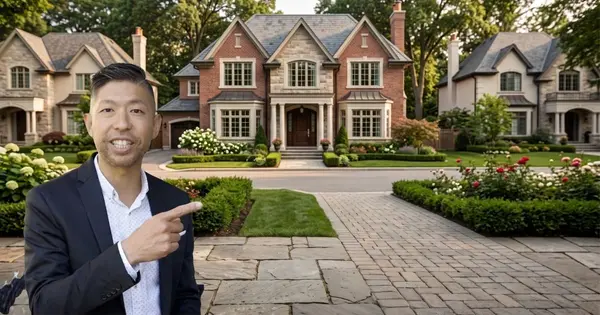
Selling a Home in Observatory, Richmond Hill
Selling a Home in Observatory, Richmond Hill: A Neighbourhood Selling Guide
Observatory sells on things buyers can verify: a National Historic Site with protected parkland that cannot be developed, a GO station inside the neighbourhood and eight parks. It also has two complications most Richmond Hill sellers do not face: a rail corridor, and new construction competing directly with your resale home. This guide covers pricing, preparation, timing and how we market listings here.

Written by a Richmond Hill and Markham Real Estate Expert
At Kirby Chan & Co. Real Estate Team, the Observatory numbers tell a clear story if you read the right one. Homes sell at about 98.6% of their own asking price, roughly a fifth go inside ten days, and the average sits near thirty-six. That is a market where accurate pricing is rewarded quickly and an ambitious price is punished slowly. The average asking price across active listings sits well above the average sold price, which is worth sitting with: a meaningful share of what is listed here is not what is selling.
Thinking About Selling in Observatory?
Call Our Dedicated Seller Hotline
416-305-8008Kirby Chan & Co. Real Estate Team
Quick takeaway: Three things decide your Observatory result. First, price against sold comparables in your own product type, because a 98.6% sold-to-list ratio means the market corrects an ambitious price with silence rather than with low offers. Second, deal with the rail question honestly if it applies to your street, because buyers who discover it at the second showing walk. Third, position against new construction deliberately, because at Observatory Hill a buyer can have brand new, and your resale home needs a reason to win that is not simply being cheaper.
Table of Contents
- Your Selling Advantage
- Understanding the Numbers Honestly
- Who Is Buying Your Home
- How to Price in Observatory
- Competing With New Construction
- Pre-Listing Preparation
- How We Market Observatory Listings
- When to List
- If You Are Downsizing or Moving On
- How We Help Observatory Sellers
- Frequently Asked Questions
Your Selling Advantage
The strongest argument for an Observatory home is one most neighbourhoods cannot make: roughly forty hectares of protected conservation parkland around a National Historic Site, land that cannot become a subdivision. For a buyer weighing where their money is safest over fifteen years, permanent green space next door is a real answer, and it is worth stating plainly rather than leaving them to work it out.
Richmond Hill GO sits inside the neighbourhood at 6 Newkirk Road, which very few Richmond Hill addresses can claim. The David Dunlap Observatory itself, the trails, the solar system walk and the City's astronomy programming give the area a character that generic marketing language cannot manufacture. Elvis Stojko Arena on 16th Avenue adds skating and, increasingly, one of the busier indoor pickleball venues in the area.
Owner occupancy near eighty-six percent keeps resale turnover fairly low, so a buyer who specifically wants an established Observatory street may have waited a while for your listing. That is genuine leverage when the price is right.
Understanding the Numbers Honestly
The sold-to-list ratio in Observatory is about 98.6%. That is a paired figure, comparing each home's sale price to its own asking price, and it is the only number here that describes negotiation. It says a correctly priced home sells within roughly one and a half percent of ask.
You will also see an average asking price near $1.47M against an average sold price near $1.26M. Do not read that as buyers negotiating fourteen percent off. The two figures cover different sets of properties, with active listings skewing toward higher-priced product including new construction while sales include more condos and established resale. What it does suggest, and this is the part sellers should sit with, is that a share of what is currently listed in Observatory is priced where the market is not transacting.
About twenty-two percent of homes sell inside ten days while the average sits near thirty-six. That is not a slow market. It is a split one. The fast fifth is priced correctly and the slow remainder is dragging the average up. Whichever group your listing joins is decided almost entirely on day one.
Want to Know What Your Observatory Home Is Worth?
Call Our Dedicated Seller Hotline
416-305-8008A valuation costs nothing and commits you to nothing
Who Is Buying Your Home
How to Price in Observatory
Yonge Street condos, established resale and Observatory Hill new construction are three separate markets with different buyers. Price against sold data within your own, then adjust for the factors that actually move value here: distance from the rail corridor, proximity to the observatory parkland, lot, build year and renovation recency. A neighbourhood-wide average that spans $499,000 condos and $2M new builds describes nothing you own.
Buyers discount for the CN corridor. If your home is near it, that belongs in your launch price rather than in a conversation after the second showing. A comparable at the same square footage three streets further east is not a comparable. Sellers who ignore this reach the same number eventually, just after six extra weeks on market and a visible price reduction.
Backing onto or sitting near protected conservation land is a durable premium, because the protection is what makes it durable. If that describes your property, it supports a stronger number than a comparable on an interior street, and the argument should be made explicitly in the marketing rather than assumed.
With apartments and condos at roughly half the neighbourhood's housing stock and more density added along Yonge, your unit is competing against similar units in the same and neighbouring buildings. Differentiation comes from view, exposure, floor, parking, locker, condition and fee stability rather than from square footage alone. Price against what actually sold in your building, not against the optimistic listing two floors up.
Competing With New Construction
Most Richmond Hill sellers compete only against other resale homes. In Observatory you are also competing against a builder with a sales centre, a marketing budget and a product that has never been lived in. Pretending that is not happening does not help you.
What resale genuinely wins on. You can close in sixty days rather than waiting years. Your lot is established with mature trees rather than a new-planting streetscape. Your price includes the finishes rather than treating them as upgrades on top of a base price. There are no development charge adjustments, no levies and no HST complications at your closing. And your buyer can walk your actual house rather than a model home.
What that means for preparation. A buyer choosing between your 1994 home and a new build is weighing character and immediacy against newness. Deferred maintenance destroys that argument instantly, because the one thing new construction cannot be accused of is a twenty-year-old furnace. If you are selling into this competition, the systems and the presentation have to be sound.
Pre-Listing Preparation
How We Market Observatory Listings
Lead with the protected land. Not "close to parks" but the David Dunlap Observatory, a National Historic Site, roughly forty hectares of conservation parkland that cannot be developed, trails and a solar system walk. That is a distinctive claim and it is verifiable, which is exactly what makes it persuasive.
Describe GO access accurately. Richmond Hill GO at 6 Newkirk Road, inside the neighbourhood, with the line's peak-weekday schedule stated rather than implied away. Accurate framing attracts the commuters it genuinely suits and stops wasting showings on those it does not.
Position explicitly against new construction. Immediate closing, established lot and mature trees, finishes included rather than upgraded, and none of the development charges, levies or adjustments a new build carries at closing. Make the comparison for the buyer instead of hoping they make it themselves.
Professional photography and video. Interior stills plus footage showing the street, the trail access and the walk to the parkland. Where the location argument is strong, context footage does more work than another kitchen angle.
Targeted campaigns and agent outreach. Families and weekday commuters across Richmond Hill, Markham and north Toronto for detached homes, first-time buyers and local downsizers for the Yonge corridor condos, plus direct presentation to agents whose clients are waiting for an established Observatory street.
When to List
If You Are Downsizing or Moving On
Observatory holds detached homes, townhomes and a substantial condo corridor within one neighbourhood, which is genuinely useful if you are downsizing. Moving from an established street to a Yonge Street condo keeps the parkland, the GO station, the arena and the people while shedding the maintenance, the stairs and the snow clearing.
After a long time in one home, decluttering alone takes months, so start before you intend to list. Our decluttering and downsizing guide covers that early work, and our reverse mortgage versus downsizing comparison helps if you are weighing whether to move at all.
If you are selling and buying at once, we manage both sides. Sequencing deserves a decision made early rather than one forced on you, and whether you sell first and rent, buy first using bridge financing or synchronize the closings depends on your financial position and your tolerance for risk. If your next home is a new build at Observatory Hill, the timing question is sharper still, since builder closing dates move and your sale proceeds have to land somewhere in the meantime.
How We Help Observatory Sellers
Product-specific comparable analysis. Sold data within your own segment, adjusted for rail proximity, parkland proximity, lot, build year, condition and renovation recency, with the evidence shown rather than a number asserted. Where we discount a comparable, we tell you why.
Positioning against new construction. We build the explicit case for your resale home against the Observatory Hill alternative, covering closing timeline, established lot, included finishes and the adjustments a new build carries that yours does not.
Systems review before listing. We identify what is likely to surface on a buyer's inspection so you can address it, document it or price for it on your terms rather than during a conditional period.
Preparation coordination. Status certificate ordered early for condos, work scoped inside and out, and trades, stagers, landscapers and photographers coordinated on your behalf. You do not project-manage the preparation.
Showing management, negotiation and closing coordination. Every showing handled, every offer presented and explained, negotiation on your behalf and the conditional period managed through to closing, running both sides as one engagement if you are buying too.
Recognition
Kirby Chan Awards and Achievements
🏆 #1 Individual Producer in Ontario for eXp Realty 2023
🏆 Top 3 Best Rated Real Estate Agent in Richmond Hill
🏆 Toronto Star Platinum Award for Best Real Estate Agent
🏆 Top Real Estate Agent Award in Markham
🏆 2X ICON Agent Award with eXp Realty
🏆 2025 Community Votes Platinum Award, Thornhill
🏆 2024 Community Votes Platinum Award, Thornhill
🏆 2025 Gold Award for Real Estate Brokers in Markham
🏆 2024 Community Votes Bronze Award, Richmond Hill
🏆 2023 Community Votes Platinum Award, Thornhill
Frequently Asked Questions
Homes here sell at 98.6% of asking. Should I price high to leave negotiating room?
No. In a 98.6% market an ambitious price produces no offers rather than low ones. Buyers compare against sold data and against new construction and simply move on. You then reduce publicly and typically sell below where an accurate launch would have landed.
The average asking price is much higher than the average sold price. What does that mean for me?
The two figures cover different sets of properties, so it is not a discount rate. But it does suggest a share of current Observatory listings are priced where the market is not transacting. Treat it as a warning about the company you would be joining, not as a benchmark to match.
How do I compete with new construction at Observatory Hill?
On immediacy and on what is already there. You can close in weeks rather than years, your lot is established with mature trees, your finishes are included rather than priced as upgrades, and your closing carries none of the development charges or levies a new build does. Deferred maintenance destroys that case, so the systems have to be sound.
My home is near the railway. How should I handle that?
Price it in and state it plainly. Buyers will discover it, and discovering it late reads as concealment and costs you the buyer. If you have upgraded windows or added insulation, document it, because that converts a concern into a solved problem.
Should I market the GO station as a major feature?
Yes, but accurately. It sits inside the neighbourhood, which is a real advantage, while the Richmond Hill line runs a limited weekday peak schedule with no weekend service. Stating that plainly attracts the commuters it genuinely suits and avoids showings to buyers who will disqualify themselves once they check the timetable.
When is the best time to sell in Observatory?
Spring, March through June, especially for detached homes, when buyer volume peaks and the parkland and mature landscaping show at their best against a builder's new plantings. Fall is a solid second window and often performs close to spring for condos.
Who can help me sell my home in Observatory, Richmond Hill?
Kirby Chan and the Kirby Chan & Co. Real Estate Team position Observatory homes for the families, weekday commuters, first-time buyers and downsizers who target this neighbourhood. We provide product-specific comparable analysis, explicit positioning against new construction, pre-listing systems review and preparation coordination. Reach me at (416) 305-8008.
Contact Kirby ChanThinking About Selling Your Observatory Home?
Observatory gives you arguments most neighbourhoods cannot make: protected parkland that will never be built on, a National Historic Site and a GO station inside the boundaries. It also puts you against a builder with a sales centre and asks you to be honest about a rail corridor. Getting the launch price right is what decides whether you join the fifth of homes gone inside ten days or the ones dragging the average up.
Kirby Chan | Kirby Chan & Co. Real Estate Team
kirby@kirbychanandco.com
https://kirbychanandco.com
Dedicated Seller Hotline
416-305-8008Note: Market figures cited reflect approximate early 2026 conditions across all Observatory property types and change over time. Days on market and pricing ratios are sensitive to conditions and can shift within a single season. Pricing, preparation recommendations and seasonal patterns vary by product type, build year, rail proximity, condition and timing. Nothing here is a guarantee of results. New construction pricing, phasing and availability are set by the builder and change. GO Transit schedules change and should be confirmed with Metrolinx. School catchment boundaries can change and should be verified with the York Region District School Board or the York Catholic District School Board. This guide is for general information only. For advice specific to your home and current conditions, consult a licensed real estate professional.
Categories
Recent Posts