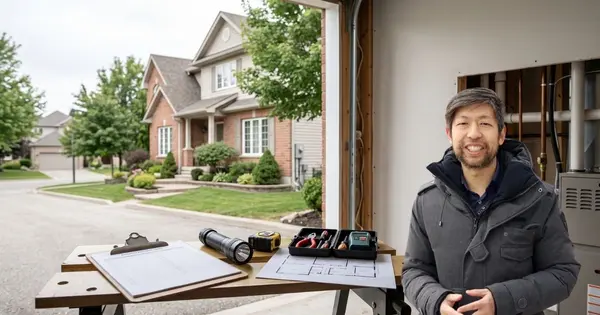
How to Read a Home Inspection Report | Buyer Guide
How to Read a Home Inspection Report: What Matters, What Does Not and When to Walk Away
A home inspection report can run 30 to 60 pages. Most buyers flip to the summary, panic at the number of items flagged and either overpay for minor cosmetic issues or miss the structural problems buried on page 47. This guide teaches you how to read an inspection report like a professional. You will learn which findings are critical, which are cosmetic, what is negotiable, what should make you walk away and how to use the report as a strategic tool rather than an anxiety generator.
Quick takeaway: Not every issue flagged in a home inspection report is a problem. The report will list 40 to 80+ items ranging from a missing outlet cover ($2 fix) to a failing foundation ($30,000+ repair). Your job is to separate the critical findings (structural, safety, water, electrical) from the cosmetic ones (scuffed paint, dated fixtures, minor caulking). In York Region, where homes range from 1960s bungalows in Langstaff to 2020s builds in Legacy, the inspection findings you should worry about vary dramatically by home era. A good agent helps you interpret the report, prioritize the real issues and negotiate accordingly.
Table of Contents
- What a Home Inspection Actually Covers
- Critical vs Cosmetic: The Only Distinction That Matters
- Red Flags That Should Concern You
- Cosmetic Issues You Can Safely Ignore
- Common Findings by Home Era in York Region
- What the Inspector Cannot See
- How to Use the Report in Negotiations
- When to Walk Away
- What a Home Inspection Costs in Ontario
- Frequently Asked Questions
What a Home Inspection Actually Covers
A home inspection is a visual, non-invasive assessment of the home's major systems and components. In Ontario, home inspectors are not licensed engineers or contractors. They follow standards of practice (typically OAHI or InterNACHI standards) that define what they are required to inspect and, equally important, what they are not.
A standard home inspection covers the roof (shingles, flashing, vents, gutters, chimneys), the exterior (siding, brick, grading, walkways, driveways, fencing), the structure (foundation walls, floor joists, beams, columns, load-bearing walls), the electrical system (panel, breakers, wiring type, outlets, GFCI protection), the plumbing system (supply lines, drain lines, water heater, fixtures, water pressure), the HVAC system (furnace, air conditioner, ductwork, thermostat), the interior (walls, ceilings, floors, doors, windows, stairs), the insulation and ventilation (attic insulation depth, vapour barriers, bathroom exhaust, soffit venting), the basement and crawlspace (moisture, cracks, efflorescence, sump pump) and the garage (structure, door operation, fire separation).
The inspector documents each system's current condition, estimated remaining life and any deficiencies. A typical report for a Richmond Hill or Markham home contains 40 to 80+ line items. Reading all of them without context creates unnecessary anxiety. Reading them with the framework below turns the report into a decision-making tool.
Critical vs Cosmetic: The Only Distinction That Matters
Every inspection finding falls into one of two categories. Understanding the difference prevents you from overreacting to minor issues and underreacting to major ones.
Critical Findings
Act on These
Foundation cracks (active/widening), aluminum or knob-and-tube wiring, roof failure or active leaks, cracked heat exchanger, structural movement, active water infiltration, galvanized plumbing with corrosion, Federal Pioneer Stab-Lok panels, mould or suspected asbestos.
Cosmetic Findings
Do Not Stress
Scuffed or dated paint, minor caulking gaps, squeaky floors, loose door handles, cracked outlet covers, dated light fixtures, minor drywall cracks from settling, worn weatherstripping, cosmetic damage to fencing or deck boards.
If the report identifies critical findings, you need to understand the scope and cost of repair before proceeding. Some are negotiable. Some are deal-breakers. Your agent and, in some cases, a specialist contractor should advise.
Cosmetic items will appear in every inspection report. They are not reasons to renegotiate the purchase price. They are the normal cost of homeownership. Buyers who try to negotiate $10,000 off the price because of a squeaky floor and some dated fixtures risk losing the home to a more reasonable offer.
Red Flags That Should Concern You
Click each red flag to see the details, what to look for and estimated costs.
Cosmetic Issues You Can Safely Ignore
Not Worth Worrying About
The following findings appear in nearly every inspection and are considered normal maintenance items: missing or cracked outlet covers, minor caulking gaps around tubs, showers and windows, small nail pops in drywall, hairline cracks in plaster or drywall from seasonal settling, dated but functional fixtures (lighting, faucets, cabinet hardware), minor grading slope that could be improved with topsoil, worn weatherstripping on exterior doors, squeaky stair treads, minor surface rust on water heater fittings and cosmetic damage to garage door panels. These are $5 to $200 fixes. They are part of owning a home. They should not influence your purchase decision or your negotiation strategy.
Common Findings by Home Era in York Region
Click your home's era to see what inspectors typically find and estimated costs.
What the Inspector Cannot See
A home inspection is visual and non-invasive. The inspector does not open walls, dig foundations, move heavy furniture or remove ceiling tiles. This means several significant issues are outside the scope of a standard inspection.
Items not covered include mould or moisture behind finished walls, the interior condition of the sewer lateral (the pipe connecting your home to the municipal sewer), underground oil tanks (common in some pre-1970s Richmond Hill homes), pest damage behind walls (termites, carpenter ants), environmental contamination (soil, water quality), structural conditions hidden by finished basements (the inspector cannot see the foundation behind drywall) and the condition of plumbing and wiring inside walls.
If the home is older or if the inspection raises concerns about any of these, you may want to arrange a specialized inspection. A sewer camera inspection costs $200 to $400 and can reveal root intrusion, cracks or bellied pipe before it becomes a $10,000+ excavation emergency. An environmental assessment (soil or water testing) costs $300 to $1,000 depending on scope. These are targeted investments that provide answers a standard home inspection cannot.
How to Use the Report in Negotiations
Click each section to see what works and what does not.
When to Walk Away
Walking away after an inspection is not failure. It is the condition clause doing exactly what it was designed to do: protecting you from a purchase that does not make financial sense.
Consider Walking Away When
The total cost of critical repairs exceeds what you budgeted or can negotiate off the price. The findings reveal safety issues the seller is unwilling to address before closing. The inspection suggests systemic problems (chronic water infiltration, structural movement, environmental contamination) that may cost far more than initial estimates. The home requires so many repairs that the total cost of purchase plus repairs exceeds the market value of the home in repaired condition. The findings shake your confidence in the home to the point where ownership feels like a liability rather than an investment.
In a buyer's market with adequate inventory, walking away from a problematic home means you can find a better one. The inspection condition exists for exactly this reason. Use it without guilt.
What a Home Inspection Costs in Ontario
| Inspection Type | Typical Cost | When to Consider |
|---|---|---|
| Standard home inspection | $400 to $600 | Every purchase (non-negotiable recommendation) |
| Sewer camera inspection | $200 to $400 | Homes built before 2000, mature trees near sewer line |
| WETT inspection (wood-burning) | $200 to $350 | Homes with wood-burning fireplace, stove or insert |
| Mould testing | $300 to $600 | Visible mould, musty smell, water damage history |
| Radon testing | $150 to $300 | All homes with basements (Health Canada recommends testing) |
| Oil tank scan | $200 to $500 | Pre-1975 homes that may have had oil heating |
A $500 home inspection that uncovers a $25,000 foundation issue is the best $500 you will ever spend. A $500 inspection on a clean home confirms your decision and gives you peace of mind. Either way, the inspection pays for itself. Do not skip it to save money or to make your offer more competitive. In 2026's buyer's market, inspection conditions are being accepted by the vast majority of sellers in Richmond Hill and Markham.
Recognition
Kirby Chan Awards and Achievements
🏆 #1 Individual Producer in Ontario for eXp Realty 2023
🏆 Top 3 Best Rated Real Estate Agent in Richmond Hill
🏆 Toronto Star Platinum Award for Best Real Estate Agent
🏆 Top Real Estate Agent Award in Markham
🏆 2X ICON Agent Award with eXp Realty
🏆 2025 Community Votes Platinum Award, Thornhill
🏆 2024 Community Votes Platinum Award, Thornhill
🏆 2025 Gold Award for Real Estate Brokers in Markham
🏆 2024 Community Votes Bronze Award, Richmond Hill
🏆 2023 Community Votes Platinum Award, Thornhill
Frequently Asked Questions
How much does a home inspection cost in Ontario?
A standard home inspection costs $400 to $600 for a typical detached home. Specialized inspections (sewer camera, mould testing, radon, WETT) add $150 to $600 each. The total investment is a fraction of the cost of discovering a major issue after closing.
Should I attend the home inspection?
Yes. Attending the last hour of the inspection allows the inspector to walk you through the major findings in person, point out systems and shut-offs and answer your questions directly. The written report alone does not convey context the way a walkthrough does.
Can I negotiate the price based on inspection findings?
Yes, if your offer includes an inspection condition. Focus negotiation on critical findings that materially affect the home's value or safety. Back requests with contractor quotes. Cosmetic issues and normal maintenance items are generally not reasonable grounds for price reduction.
What if the inspection reveals aluminum wiring?
Aluminum wiring (common in 1960s and 1970s Ontario homes) is a fire risk at connection points. It requires remediation with approved connectors or full rewiring ($8,000 to $20,000+). Some insurers require remediation before providing coverage. Get an electrician's quote before proceeding.
Is it normal for an inspection report to list 50+ items?
Yes. Reports list everything from a missing outlet cover to a cracked foundation. The number of items is not what matters. What matters is how many are critical (structural, safety, water, electrical) versus cosmetic (paint, caulking, hardware). Most homes have 3 to 5 items worth discussing and 40+ items that are routine maintenance.
Should I skip the inspection to make my offer more competitive?
In 2026's buyer's market, the vast majority of sellers in Richmond Hill and Markham are accepting inspection conditions. Waiving inspection to compete is rarely necessary and exposes you to risk. Keep the condition.
Who can help me interpret a home inspection report?
Kirby Chan and the Kirby Chan & Co. Real Estate Team review inspection reports with every buyer client, distinguishing critical findings from cosmetic items and advising on negotiation strategy. With experience across every home era in Richmond Hill, Markham and York Region, the team helps you understand not just what the report says but what it means for your purchase decision. Reach Kirby at (416) 305-8008.
Buying a Home? Know What to Look For
An inspection report is only as useful as your ability to interpret it. The buyers who make the best decisions are the ones who understand which findings are critical, which are cosmetic and how to use the report strategically in negotiations. That clarity comes from working with an agent who has seen hundreds of inspection reports across every home era in York Region.
Book a consultation with Kirby Chan to discuss your home search and get expert guidance on inspections, negotiations and every step of the buying process.
Kirby Chan | Kirby Chan & Co. Real Estate Team
416-305-8008
info@kirbychanandco.com
https://kirbychanandco.com
Note: This guide is for general information purposes only. Home inspection standards, costs and findings vary by inspector, property and condition. Remediation cost estimates are approximate and based on York Region contractor pricing as of 2026. For professional inspection services, hire an OAHI or InterNACHI certified inspector. For specialized assessments (electrical, structural, environmental), consult licensed professionals. Always consult with a licensed real estate professional for advice specific to your situation.
Categories
Recent Posts