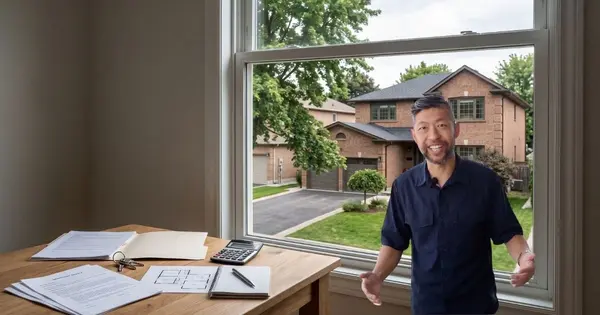
What Happens When a Home Does Not Sell: Next Steps for Richmond Hill Sellers
What Happens When a Home Does Not Sell: Next Steps for Richmond Hill Sellers
Your home has been on the market for weeks. The showings have slowed. The offers have not come. The listing is about to expire or has already expired. This is frustrating and stressful, but it is not the end. A home that does not sell the first time around is not unsellable. It is a home where something in the strategy needs to change. The answer is almost always in one of three places: the price, the presentation or the marketing. This guide walks you through exactly what to evaluate, what to change and how to re-enter the market with a strategy that produces a different result.
Written by a Richmond Hill and Markham Real Estate Expert
At Kirby Chan & Co. Real Estate Team, we specialize in re-listing homes that did not sell. We diagnose the problem with data, not guesses, build a corrected strategy covering price, presentation and marketing, and re-launch the listing as a fresh opportunity. We have sold homes that sat with other agents for months because the strategy was wrong, not the home.
Quick takeaway: When a home does not sell, the most common cause is overpricing. The second most common cause is poor presentation: dated finishes, clutter, weak photography. The third is inadequate marketing. Diagnosing which of these three is the problem requires data: showing count, showing feedback, comparable sales analysis and an honest assessment of how the home compares to the competition. Once you identify the gap, the solution is straightforward. The hardest part is accepting that the original strategy did not work and committing to a different approach.
Table of Contents
- Why Homes Do Not Sell
- How to Diagnose the Problem
- When the Price Is the Problem
- When the Presentation Is the Problem
- When the Marketing Is the Problem
- How to Re-List Successfully
- Should You Switch Agents?
- Seasonal Timing Considerations
- Frequently Asked Questions
Why Homes Do Not Sell
In Richmond Hill and Markham, homes that do not sell are almost never unsellable. The land alone has value. The neighbourhood has demand. Buyers exist. The problem is that the home, at its current price, in its current condition, with its current marketing, is not competitive with the alternatives available to buyers. Buyers have options. If your home is not the best option at the price point, they choose something else.
Understanding this is the first step toward fixing it. The home is not the problem. The strategy is the problem. And the strategy can be changed.
Did Your Listing Expire Without Selling?
Call Our Dedicated Seller Hotline
416-305-8008Kirby Chan & Co. Real Estate Team
How to Diagnose the Problem
The data tells you which lever to pull.
If the home is not generating showings (fewer than 2 to 3 per week in the first two weeks), buyers are screening it out online before they even visit. This means the price is too high relative to what they see in the photos. Buyers compare your listing to every other listing in the same price range. If comparable homes offer more for the same money, buyers skip yours. Low showings is the clearest signal that the price needs to come down.
If buyers are coming through but not making offers, they are interested at the price point but something about the home in person is not matching their expectations. Common reasons: the home shows poorly (cluttered, dated, not staged), the condition is worse than the photos suggested, the layout does not work for them, or the home does not compare favourably to others they have seen.
The fix is in the showing feedback. Every buyer's agent provides feedback after a showing. Collect and analyze this feedback to identify the pattern. If multiple buyers mention the same issue, that is the issue to address.
If the listing is not generating online views and clicks, the marketing is not reaching buyers. This could be poor listing photos (the single biggest factor in online engagement), weak listing copy, inadequate digital advertising or a listing buried in search results. Online engagement metrics should be tracked on every listing and the marketing strategy adjusted when the numbers are not performing.
An overpriced home with poor staging and mediocre photos listed with minimal marketing is fighting on every front. The solution requires addressing all three simultaneously: reprice based on current comparable data, invest in professional staging and photography and launch a fresh marketing campaign. Fixing one of the three while ignoring the others will not produce a different result.
When the Price Is the Problem
What you paid for the home, what you spent on renovations, what your neighbour sold for two years ago and what you need to net after the sale are all irrelevant to the market. The market price is determined by what comparable homes are selling for right now. If the comparable data says your home is worth $1,400,000 and you are listed at $1,550,000, no amount of marketing will produce a buyer at $1,550,000. The price must reflect the current market, not your expectations.
Reducing the price by $10,000 or $20,000 on a $1,500,000 listing does not change buyer behaviour. It signals distress without changing the competitive position. If the home is overpriced by $100,000, a $20,000 reduction still leaves it $80,000 above market. Effective price corrections are meaningful: large enough to move the listing into a new buyer search bracket and large enough to change the competitive landscape.
Every day on market reduces your negotiating power. Buyers see high days on market as a sign that the home is overpriced or has problems. After 30 days, buyers assume they can offer below asking. After 60 days, they assume something is wrong. After 90 days, the listing becomes stale and agents stop showing it. The longer you wait to correct the price, the less you will ultimately receive. The best time to correct is early, before the stigma takes hold.
When the Presentation Is the Problem
When the Marketing Is the Problem
Generic descriptions like "spacious home in desirable neighbourhood" do nothing to differentiate your listing. The copy should highlight the specific features buyers search for: lot dimensions, school catchment, proximity to transit, recent upgrades with years, room sizes and lifestyle benefits. Specific, accurate descriptions sell. Vague adjectives do not.
If the original listing relied solely on MLS exposure, the reach was limited. A proper digital campaign targets buyers by geography, search behaviour and demographics. It serves professional photos and video directly to people who are actively searching for homes in your price range and neighbourhood. Engagement metrics should be tracked and the strategy optimized throughout the listing period.
A professional video walkthrough gives buyers a sense of the home's flow, room sizes and natural light that static photos cannot convey. Virtual tours allow buyers to explore the home at their own pace before booking a showing. Both increase engagement, attract out-of-town buyers and generate more qualified showings. If the original listing did not include these, adding them for the re-listing gives the home a fresh presence online.
Ready to Re-Launch Your Listing?
Call Our Dedicated Seller Hotline
416-305-8008No pressure, just honest advice
How to Re-List Successfully
If the listing has expired or you are terminating it, the days-on-market counter resets when you re-list with a new MLS number. This removes the stale listing stigma. The home appears as a new listing in buyer searches, which generates a fresh wave of attention. Simply reducing the price on an existing listing does not produce the same effect as a fresh listing with a new price, new photos, new marketing and a reset days-on-market counter. Our guide on what to do when your listing expires in Richmond Hill covers the first steps to take.
Do not re-list until every identified issue is addressed. If the price needs correcting, correct it fully, not incrementally. If the home needs staging, stage it completely. If the photos need replacing, reshoot everything. If the marketing plan needs upgrading, build the full campaign before listing day. Re-listing with only partial changes produces the same partial result. The second attempt must be materially different from the first.
The re-listing should feel like a debut, not a retry. New MLS number, new photos, new listing copy, fresh digital campaigns, agent networking notifications and a coming-soon strategy before the public launch. The goal is to generate the same level of attention and urgency that a new listing receives on day one. Buyers who screened out the original listing at a higher price will now see a completely refreshed listing at a competitive price and give it serious consideration.
Should You Switch Agents?
Switch agents if your current agent overpriced the home to win the listing and is now asking you to reduce, if they did not provide professional staging and photography, if their marketing consisted of only an MLS listing with no additional strategy, if they are not communicating regularly with showing feedback and market updates, or if they do not have a clear, data-backed plan for what changes are needed.
Stay with your current agent if they provided accurate pricing advice that you overrode, if they provided professional staging and photography, if they ran a comprehensive marketing campaign and if the primary reason the home did not sell is that you were not willing to accept the price the market offered. In that case, the agent did their job. A new agent will give you the same pricing advice because the market has not changed.
If you decide to switch, look for an agent who provides an honest comparable analysis rather than just a higher price to win the listing, a detailed marketing plan with professional staging and photography included, a track record of selling homes in your neighbourhood and a willingness to tell you what you need to hear rather than what you want to hear.
Seasonal Timing Considerations
Recognition
Kirby Chan Awards and Achievements
🏆 #1 Individual Producer in Ontario for eXp Realty 2023
🏆 Top 3 Best Rated Real Estate Agent in Richmond Hill
🏆 Toronto Star Platinum Award for Best Real Estate Agent
🏆 Top Real Estate Agent Award in Markham
🏆 2X ICON Agent Award with eXp Realty
🏆 2025 Community Votes Platinum Award, Thornhill
🏆 2024 Community Votes Platinum Award, Thornhill
🏆 2025 Gold Award for Real Estate Brokers in Markham
🏆 2024 Community Votes Bronze Award, Richmond Hill
🏆 2023 Community Votes Platinum Award, Thornhill
Frequently Asked Questions
Why did my home not sell?
The most common cause is overpricing. The second is poor presentation (no staging, weak photos, dated finishes). The third is inadequate marketing. Diagnose which applies by analyzing showing count, showing feedback and comparable sales data.
Should I lower the price or improve the home?
If showings are low, lower the price since buyers are not even coming through. If showings are adequate but offers are not coming, improve the presentation since buyers are coming but not converting. Often both are needed.
How long should I wait before re-listing?
Two to four weeks off-market is typically sufficient to reset the days-on-market counter and prepare staging, photography and cosmetic updates for the re-launch. Do not wait so long that you miss the next selling season.
Does the days-on-market counter reset when I re-list?
Yes, if the listing expires or is terminated and a new MLS number is assigned. The new listing shows 0 days on market. Buyers and agents can still see the listing history if they look, but the active counter resets.
Should I switch agents?
Switch if your agent overpriced to win the listing, did not provide professional staging and photography, ran minimal marketing or cannot explain why the home did not sell with a data-backed diagnosis. Stay if they gave honest advice you overrode and executed a strong marketing plan.
What is the best season to re-list?
Spring (March through May) is the strongest selling season. Fall (September through November) is the second strongest. Winter has fewer buyers but also less competition. The right season depends on when your listing expired and how quickly you can prepare.
Who can help me sell a home that did not sell the first time?
Kirby Chan and the Kirby Chan & Co. Real Estate Team specialize in re-listing homes that did not sell. We diagnose the problem with data, build a corrected strategy covering price, presentation and marketing and re-launch the listing as a fresh opportunity. Reach me at (416) 305-8008.
Contact Kirby ChanYour Home Did Not Sell. Now What?
The home is not the problem. The strategy is the problem. I help Richmond Hill sellers who are frustrated with an expired or stale listing by diagnosing the issue, building a corrected plan and re-launching with a strategy that produces a different result. No generic advice. No guesswork. Just data, preparation and execution.
Kirby Chan | Kirby Chan & Co. Real Estate Team
kirby@kirbychanandco.com
https://kirbychanandco.com
Dedicated Seller Hotline
416-305-8008Note: Selling timelines, pricing strategies, staging costs, marketing approaches and seasonal patterns described in this guide are general in nature and vary by property, neighbourhood and market conditions. This guide is for general information only and does not constitute legal or financial advice. For advice specific to your property and situation, consult a licensed real estate professional.
Categories
Recent Posts