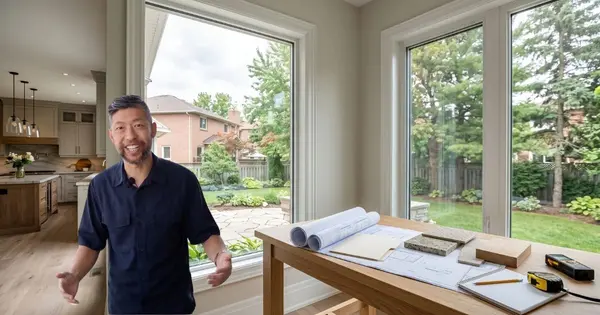
What Actually Adds Value to a Home in York Region, and What Does Not
Where renovation money goes furthest, which projects rarely return their cost, what matters if you are selling next spring versus living here another ten years, and the cheap work most sellers skip.

Written by a Richmond Hill and Markham Real Estate Expert
At Kirby Chan & Co. Real Estate Team, the most expensive conversation we have is with a seller who renovated the wrong thing. Usually a kitchen, usually six months before listing, usually to a standard the street does not support. The money is gone and the price does not reflect it. An hour of advice beforehand would have redirected the same budget into work that actually paid.
Thinking About Renovating Before You Sell?
Call Our Dedicated Real Estate Hotline
416-305-8008
No pressure, just a clear conversation
Quick takeaway: If you are selling within a year, spend on presentation rather than renovation. Paint, flooring, lighting, decluttering and photography do most of the work and cost a fraction of a kitchen. If you are staying five years or more, renovate for how you want to live, because you get the use of it and the value question becomes secondary. The one thing that pays either way is fixing deferred maintenance, because buyers discount for it far more than it costs to put right.
Table of Contents
Ask a Different Question First
Start Here How Long Are You Staying?
"What adds value?" is the wrong opening question, because the answer changes entirely depending on your timeline.
If you are selling soon, you are spending money to influence a buyer who will walk through the house once and form an opinion in ninety seconds. That is a presentation problem, not a renovation problem.
If you are staying a decade, you are spending money on your own life. You get the use of it for ten years, and whatever it does to resale is a secondary consideration. Renovating a kitchen you will cook in daily does not need to pay for itself to be worth doing.
The expensive mistake sits in the middle: renovating heavily, then selling within a year or two, and expecting the market to reimburse you. It usually does not.
If You Are Selling Within a Year
Paint, and the Right Colours
Consistently the best return available. Neutral throughout, including over feature walls and bold colours that worked for you but will not for a stranger. Ceilings and trim count. Painting is cheap relative to everything else and it is the single most noticeable change a buyer walks into.
Flooring, Where It Is Poor
Worn carpet and damaged flooring are among the few things that genuinely hurt a price, because buyers over-estimate what replacement costs and deduct accordingly. Refinishing existing hardwood is often cheaper than buyers assume and shows extremely well. Replacing good flooring to change the colour is not worth it.
Decluttering and Depersonalizing
Costs almost nothing and changes how large a home feels more than any renovation. Clear surfaces, empty a third of every closet, and remove most of what is on the walls. If you need somewhere to put it, a month of storage is cheaper than almost anything else on this list. Our decluttering guide covers the process room by room.
Lighting
The cheapest upgrade nobody does. Replace dated fixtures, put brighter consistent bulbs throughout, clean the windows and open every blind for showings. Dark rooms photograph badly and read as small. This is an afternoon and a modest spend.
The Front of the House
Buyers form an opinion before they open the door, and many drive past before booking. The door painted or replaced, clean windows, tidy garden beds, a working light, no cracked walkway. None of it is expensive and all of it is visible in the first photograph.
Staging and Photography
Most buyers see the photographs before they see the house, and a meaningful number decide whether to book a showing from them alone. Professional photography is not optional. Staging matters most where a home is empty or the furniture is dated or wrongly scaled, and in those cases it changes the result considerably.
Want a Walkthrough Before You Spend Anything?
Call Our Dedicated Real Estate Hotline
416-305-8008
No pressure, just a clear conversation
If You Are Staying Five Years or More
Different Rules Renovate for Your Life, With One Eye on Resale
Over a long horizon the calculation changes. You get years of use, the market moves, and a renovation done well ages into being simply what the house is rather than an upgrade someone has to value.
Three principles still worth holding. Fix the building before you decorate it, meaning roof, windows, insulation and drainage come before a new kitchen. Add usable space rather than luxury finish, because square footage and an extra bathroom hold value more reliably than premium materials. And permit the work, because unpermitted additions and suites create problems years later that cost more to unwind than the permits would have cost.
A finished basement with a legal secondary suite is the clearest example of something that both improves your life and holds value, because it widens the buyer pool at resale. Our guide to legal basement apartments covers what legal actually requires.
Deferred Maintenance Costs You Twice
Buyers Deduct More Than the Repair Costs
A visible defect does two things. It costs whatever it costs to fix, and it makes a buyer wonder what else has been neglected. The second effect is far more expensive than the first, and it shows up as a lower offer or a longer list of conditions.
The usual suspects in York Region homes of this age: a roof near the end of its life, windows with failed seals, a furnace or air conditioner well past its expected service life, a cracked driveway, poor grading around the foundation, water staining in a basement, and anything visibly leaking.
You do not necessarily have to replace a roof before selling. But know its age, be ready to say so, and understand that a buyer will price it in whether you mention it or not. Fixing the small visible things is almost always worth it. The large items are a judgement call worth taking advice on.
The Ceiling Your Street Puts on You
Overcapitalizing You Cannot Renovate Past Your Neighbourhood
Every street has a price range buyers accept, set by what comparable homes around it sell for. Renovate well above that range and the market will not follow you, because a buyer with that budget will simply buy in a more expensive neighbourhood instead.
This matters most in the more uniform communities, where a buyer can compare your home directly against three near-identical ones. It matters less in older, more varied neighbourhoods where the housing was never consistent to begin with.
Before any significant renovation, look at what the top few sales on your street and in your immediate area actually achieved. That number is your realistic ceiling, and spending past it is spending for your own enjoyment rather than for return. Which is a perfectly good reason, as long as you know that is what you are doing.
Projects That Rarely Return Their Cost
Especially Right Before Selling
A full kitchen renovation immediately before listing. The most common expensive mistake. Buyers rarely pay the full cost back, and many would have preferred to choose their own finishes. Painting existing cabinets, replacing handles and updating the lighting delivers most of the visual effect for a small fraction of the cost.
A swimming pool. Divides buyers rather than attracting them. Families with young children often see a hazard, and everyone sees maintenance. Build one because you want to swim.
Highly personal or elaborate landscaping. Tidy and maintained adds. Elaborate reads as work the next owner has to keep up.
Converting a bedroom to something else. Removing a bedroom to create an office, a gym or a walk-in closet usually costs you, because bedroom count is one of the first filters buyers search on.
Very high-end finishes in a mid-range home. See the ceiling above. A buyer will not pay a premium for a kitchen that belongs in a house two price brackets up.
What Matters Specifically in York Region
Multigenerational Capability
A main-floor bedroom and full bathroom, a finished basement with a separate entrance, or a second kitchen all appeal strongly here, because multigenerational households are common across Richmond Hill, Markham and Thornhill. These features widen your buyer pool in a way they would not in many other markets.
The Twenty-Year Systems
A large share of York Region housing was built from the late 1980s through the early 2000s, which means roofs, furnaces, air conditioners and windows are all reaching the end of their service lives at roughly the same time across whole neighbourhoods. Buyers here know to ask. Having the dates ready, and ideally the receipts, is worth more than it sounds.
Parking and the Driveway
Most households here run two cars and many run more. Usable parking matters, and a cracked or crumbling driveway is both an eyesore in the first photograph and a cost a buyer will deduct. Resurfacing is modest relative to its visual effect.
Permits, and Why They Come Up at Resale
Keep the Paperwork, It Is Worth Money
Work that required a permit and did not get one causes problems at sale. Buyers' lawyers ask, municipalities can have open records, and a basement apartment or addition that cannot be shown as permitted is discounted or raises conditions late in a deal.
Requirements differ between Richmond Hill, Markham and Vaughan and they change, so confirm with your own municipality before starting rather than relying on what a contractor says is normal.
Keep every permit, inspection sign-off, electrical certificate and major receipt in one folder. When you sell, that folder answers questions a buyer would otherwise discount for, and it is the cheapest value-protection available to a homeowner.
Recognition
Kirby Chan Awards and Achievements
🏆 #1 Individual Producer in Ontario for eXp Realty 2024
🏆 Top 3 Best Rated Real Estate Agent in Richmond Hill
🏆 Toronto Star Platinum Award for Best Real Estate Agent
🏆 Top Real Estate Agent Award in Markham
🏆 2X ICON Agent Award with eXp Realty
🏆 2025 Community Votes Platinum Award, Thornhill
🏆 2024 Community Votes Platinum Award, Thornhill
🏆 2025 Gold Award for Real Estate Brokers in Markham
🏆 2024 Community Votes Bronze Award, Richmond Hill
🏆 2023 Community Votes Platinum Award, Thornhill
Frequently Asked Questions
Should I renovate my kitchen before selling?
Usually not a full renovation. Buyers rarely pay the whole cost back and many would prefer to choose their own finishes. Painting existing cabinets, replacing handles and updating lighting delivers most of the visual effect for a small fraction of the cost. If you are staying five years or more, renovate for your own use instead.
What is the best return on investment before selling a home?
Paint, flooring where it is poor, decluttering, lighting, the front of the house, and professional photography. All are presentation rather than renovation, all cost a fraction of a kitchen, and together they do most of the work in forming a buyer's first impression.
Does a swimming pool add value to a home?
It divides buyers more than it attracts them. Families with young children often see a hazard and most buyers see maintenance. Build a pool because you want to use it, not as an investment in resale value.
What is overcapitalizing?
Spending more on a property than the neighbourhood supports. Every street has a price range set by comparable sales, and a buyer with a larger budget will usually buy in a more expensive area rather than pay a premium on yours. Check what the top recent sales near you achieved before any major renovation.
Do I need to replace my roof before selling?
Not necessarily, but know its age and expect buyers to price it in whether you raise it or not. Small visible defects are almost always worth fixing because buyers deduct more than the repair costs and wonder what else has been neglected. Large items are a judgement call worth taking advice on first.
Why do permits matter when I sell?
Buyers' lawyers ask about them and municipalities can have open records. Work that required a permit and did not get one is discounted or raises conditions late in a deal. Keep permits, inspection sign-offs, electrical certificates and major receipts in one folder, because that folder answers questions buyers would otherwise deduct for.
Who can advise me on what to spend before selling in York Region?
Kirby Chan is a Broker with Kirby Chan and Co. Real Estate Team at eXp Realty, serving Richmond Hill, Markham and Thornhill. The team walks through homes before any work starts and tells owners what is worth doing, what is not, and what the realistic ceiling is for their street. Reach the team at 416-305-8008.
Contact Kirby Chan
Before You Spend Anything, Get a Walkthrough
An hour in the house before the work starts is worth more than the work itself. We will tell you what is worth doing, what to skip, and what your street will realistically support, including when the honest answer is to do nothing and list as is.
Book a Consultation
Kirby Chan, Broker
416-305-8008
info@kirbychanandco.com
Carrie Szeto, Salesperson
416-505-6285
carrie@kirbychanandco.com
Kirby Chan & Co. Real Estate Team, eXp Realty
https://kirbychanandco.com
Note: This guide is general information. Returns on renovation vary considerably by property, neighbourhood, quality of work and market conditions, and no figures are quoted here for that reason. Permit and zoning requirements differ between municipalities and change over time, so confirm with your own municipality before starting work. Consult a licensed real estate professional about your specific property, and a qualified contractor, designer or engineer about any construction work.