Moving to Richmond Hill from Toronto: What You Need to Know
Moving to Richmond Hill from Toronto: What You Need to Know
Every year, thousands of families leave Toronto for Richmond Hill. The reasons are consistent: more space, better schools, lower taxes, quieter streets and a lifestyle that prioritizes family over density. But moving from the city to the suburbs is not just a change of address. It is a change in how you commute, how you shop, how your children go to school, what you pay in taxes and what you get for your money. This guide covers every dimension of the move so you know exactly what to expect before you make the decision.
Quick takeaway: A family selling a semi in Toronto for $1,200,000 can buy a detached home on a full lot in Richmond Hill for $1,300,000 to $1,500,000, save $25,000 on day one by avoiding Toronto's municipal land transfer tax, pay lower property tax rates, send their children to some of the highest-ranked schools in Ontario and commute to downtown Toronto in 40 to 55 minutes by GO Train. The trade-off is that you need a car for daily errands, you lose the walkability and density of city living and cultural amenities are fewer. For families who prioritize space, schools and long-term value, the math works.
The Financial Comparison at a Glance
| Category | Toronto | Richmond Hill | Advantage |
|---|---|---|---|
| Municipal land transfer tax | $24,975 (on $1.5M) | $0 | Save $24,975 on day one |
| Provincial LTT (on $1.5M) | $24,975 | $24,975 | Same |
| Property tax rate | ~0.60-0.65% | ~0.65-0.75% | Comparable (similar) |
| Detached home at $1.5M | ~1,500 sq ft, 25 ft lot | ~2,800-3,200 sq ft, 40-50 ft lot | Nearly double the space |
| School quality (avg EQAO) | Varies widely | Consistently high | Richmond Hill |
| Commute to downtown | TTC (30-60 min) | GO Train (40-55 min) | Comparable |
| Walkability | High (transit, shops, restaurants) | Car-dependent for most errands | Toronto |
Table of Contents
- The Money: What You Save and What You Gain
- The Space: What $1.5M Buys You
- The Schools
- The Commute
- Richmond Hill Neighbourhoods to Know
- The Trade-Offs
- Frequently Asked Questions
The Money: What You Save and What You Gain
Toronto charges a municipal land transfer tax on top of the provincial LTT. Richmond Hill does not. On a $1,500,000 purchase, the Toronto municipal LTT is approximately $24,975. That is $24,975 you save on closing day by buying in Richmond Hill instead of Toronto. On a $2,000,000 purchase, the savings are approximately $34,975. This is the single largest financial incentive for families moving north.
At $1,500,000 in Toronto, you are looking at a narrow semi-detached or a small detached on a 20 to 25-foot lot with 1,200 to 1,800 square feet of living space. At the same price in Richmond Hill, you are looking at a detached home on a 40 to 50-foot lot with 2,800 to 3,200 square feet, a two-car garage, a full basement and a proper backyard. The space differential is dramatic and it is the reason most families cite when explaining why they moved.
While Richmond Hill's property tax rate is slightly higher than Toronto's, the assessed values in Richmond Hill are often lower relative to market value because MPAC assessments lag the market differently in each municipality. The net result is that the total tax burden (property tax plus the absence of municipal LTT at purchase) is meaningfully lower in Richmond Hill. My true cost of owning guide breaks down every carrying cost in detail.
Many detached homes in Richmond Hill have basements that can be converted into legal rental apartments generating $1,500 to $2,200/month. This is harder to do in Toronto semis where basement ceiling heights are often too low and lot constraints limit separate entrances. My basement apartment guide covers the full process, costs and income potential.
The Space: What $1.5M Buys You
The Comparison
$1.5M in Toronto vs $1.5M in Richmond Hill
Toronto: A semi-detached or narrow detached on a 20 to 25-foot lot. Three bedrooms, one or two bathrooms, 1,200 to 1,800 square feet above grade. No garage or a single tandem. Small backyard or patio. Street parking. Possibly a finished basement with low ceilings.
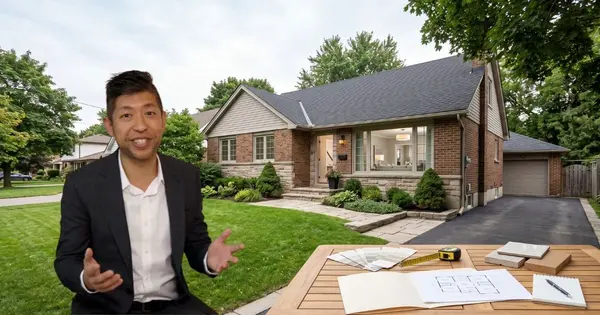
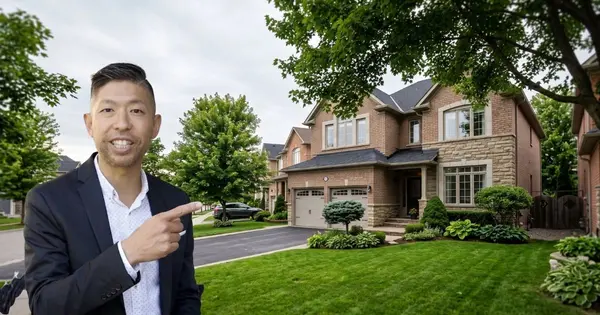
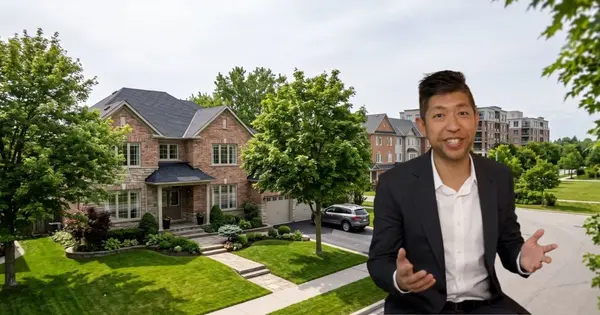
Richmond Hill: A detached home on a 40 to 50-foot lot. Four bedrooms, three to four bathrooms, 2,800 to 3,200 square feet above grade. Two-car attached garage with 4 to 6 parking spots. Full backyard with room for a deck, playset and garden. Full-height basement with suite potential.
Same budget. Nearly double the space. That is the math that moves families north.
The Schools
York Region's public schools consistently outperform the provincial average on EQAO standardized tests. Schools like Bayview Secondary, Unionville High School and Markville Secondary are among the top-performing schools in Ontario. The concentration of high-quality schools across Richmond Hill and Markham is one of the strongest in the province. In Toronto, school quality varies dramatically by neighbourhood. In Richmond Hill, consistently strong performance is the norm, not the exception. My schools guide maps every top school to the neighbourhoods it serves.
YRDSB offers French Immersion starting in Grade 1 at designated schools, IB Diploma programmes at select secondary schools and Advanced Placement courses at several others. These programs are available without the need for private school tuition ($20,000 to $35,000/year). Families moving from Toronto who are considering private school can redirect that tuition budget toward the mortgage and send their children to a public school that delivers comparable academic outcomes.
The Commute
Tap each commute option to expand.
GO Train (Langstaff/Richmond Hill Station) TAP TO OPEN ▾
The Richmond Hill GO line runs from Gormley through Richmond Hill to Union Station. Langstaff GO is the closest station for most Richmond Hill residents. The ride to Union Station takes approximately 40 to 50 minutes. Service frequency has increased with electrification plans underway on the corridor. GO Transit is the preferred commute for professionals working in downtown Toronto. Monthly passes and Presto fare integration with TTC make the cost manageable ($300 to $400/month for a regular commuter).
Highway 404 and Highway 407 TAP TO OPEN ▾
Highway 404 runs directly through Richmond Hill providing north-south access to the Don Valley Parkway and downtown Toronto. The drive to downtown is 35 to 50 minutes outside rush hour and 50 to 80 minutes during peak traffic. Highway 407 (toll road) runs east-west and provides congestion-free travel across the GTA ($15 to $30 per trip depending on distance and time). For commuters working in Markham, Vaughan or Mississauga, the 407 is a practical daily option.
Viva Rapid Transit and YRT TAP TO OPEN ▾
York Region Transit (YRT) and Viva rapid transit operate bus routes throughout Richmond Hill. The Viva Blue line runs along Yonge Street connecting to Finch subway station (and eventually the Yonge North Subway Extension). The Viva Purple line runs along Highway 7. Local YRT buses serve residential neighbourhoods. Transit within Richmond Hill is functional but not comparable to the TTC. A car is the primary mode of transportation for most families.
Yonge North Subway Extension (Coming) TAP TO OPEN ▾
The Yonge North Subway Extension will extend Line 1 from Finch Station to Richmond Hill Centre at Highway 7. When completed, Richmond Hill residents near the station will have direct subway access to downtown Toronto. The project is under construction and will transform commute options and property values near the station. Homes within walking distance of the future station are already pricing in the transit premium.
Richmond Hill Neighbourhoods to Know
Richmond Hill's most prestigious neighbourhoods. Executive detached homes on large lots ($1.5M to $3.0M+). Top-ranked schools (Bayview Secondary catchment). Quiet, tree-lined streets with low traffic. Close to Highway 404 for commuting. The buyers here are families who want space, privacy and access to the best schools. If you are leaving a high-value Toronto neighbourhood like Leaside, Lawrence Park or Bayview Village, this area feels like a natural transition.
The closest Richmond Hill gets to urban walkability. Near Hillcrest Mall, Yonge Street retail, restaurants and Viva transit. Homes range from detached ($1.2M to $1.8M) to condos ($500K to $800K). For Toronto buyers who want suburban space but are not ready to give up all walkability, this corridor offers the best compromise. The future Yonge North Subway Extension station at Highway 7 will further increase transit connectivity and property values in this area.
At the north end of Richmond Hill, Oak Ridges borders the Moraine and offers larger lots, ravine settings, conservation lands and a rural-suburban feel. Homes range from $1.3M to $2.5M+ with some estate-sized properties. Ideal for families who want maximum outdoor space, nature access and quiet living. The trade-off is a longer commute to Toronto (add 10 to 15 minutes to any commute time from central Richmond Hill).
If schools are the primary driver, the Markham neighbourhoods adjacent to Richmond Hill offer equally strong options. Unionville, Berczy Village, Cornell and Wismer Commons are all within 10 to 15 minutes of Richmond Hill and share the same York Region school board, transit infrastructure and suburban lifestyle. I help buyers evaluate both municipalities to find the neighbourhood that best fits their priorities.
The Trade-Offs
Richmond Hill is not Toronto. Tap each trade-off to expand.
You Need a Car TAP TO OPEN ▾
Richmond Hill is a suburban community. Groceries, errands, children's activities, medical appointments and most daily tasks require a car. If you are used to walking to the store, taking the TTC to dinner or living without a vehicle, this is the biggest lifestyle adjustment. Most Richmond Hill households have two cars. Budget $8,000 to $12,000/year per vehicle (insurance, gas, maintenance) when calculating the true cost of the move.
Fewer Cultural Amenities TAP TO OPEN ▾
Toronto offers world-class restaurants, theatres, museums, galleries, live music venues and cultural diversity within walking distance or a short TTC ride. Richmond Hill has excellent Asian cuisine, solid retail (Hillcrest Mall, Times Square) and community recreation, but the cultural density of Toronto is not replicated. For families, this matters less because daily life revolves around school, activities and home. For adults who value nightlife and cultural access, this is a genuine trade-off.
The Commute Is Real TAP TO OPEN ▾
If you work downtown, the commute is 40 to 55 minutes by GO Train or 50 to 80 minutes by car during rush hour. This is longer than commuting from midtown Toronto. Hybrid and remote work arrangements have reduced the impact for many families, but if you need to be downtown five days a week, the commute adds 90 to 120 minutes to your daily round trip. Factor this into your quality-of-life calculation alongside the space, schools and financial benefits.
Recognition
Kirby Chan Awards and Achievements
🏆 #1 Individual Producer in Ontario for eXp Realty 2023
🏆 Top 3 Best Rated Real Estate Agent in Richmond Hill
🏆 Toronto Star Platinum Award for Best Real Estate Agent
🏆 Top Real Estate Agent Award in Markham
🏆 2X ICON Agent Award with eXp Realty
🏆 2025 Community Votes Platinum Award, Thornhill
🏆 2024 Community Votes Platinum Award, Thornhill
🏆 2025 Gold Award for Real Estate Brokers in Markham
🏆 2024 Community Votes Bronze Award, Richmond Hill
🏆 2023 Community Votes Platinum Award, Thornhill
Frequently Asked Questions
Tap a question to expand the answer.
How much do I save on land transfer tax by buying in Richmond Hill instead of Toronto?
On a $1,500,000 purchase, you save approximately $24,975 by avoiding Toronto's municipal LTT. On a $2,000,000 purchase, the savings are approximately $34,975. Richmond Hill charges only the provincial LTT.
How long is the commute from Richmond Hill to downtown Toronto?
40 to 50 minutes by GO Train from Langstaff station to Union Station. 35 to 50 minutes by car outside rush hour, 50 to 80 minutes during peak traffic via Highway 404 and the DVP.
Are schools really better in Richmond Hill?
York Region's public schools consistently outperform the provincial average on standardized tests. The concentration of top-performing schools across Richmond Hill and Markham is one of the strongest in Ontario. Toronto school quality varies dramatically by neighbourhood.
What does $1.5M buy in Richmond Hill vs Toronto?
In Toronto: a semi or narrow detached, 1,200 to 1,800 sq ft, 20 to 25-foot lot. In Richmond Hill: a detached home, 2,800 to 3,200 sq ft, 40 to 50-foot lot with two-car garage, full basement and proper backyard. Nearly double the space at the same price.
Do I need a car in Richmond Hill?
Yes. Richmond Hill is a suburban community and a car is required for daily errands, children's activities and most tasks outside of commuting to Toronto (which can be done by GO Train). Most households have two cars.
When is the Yonge North Subway Extension opening?
The project is under construction. Check Metrolinx for the latest timeline. When completed, it will extend Line 1 from Finch to Richmond Hill Centre at Highway 7, providing direct subway access to downtown Toronto for Richmond Hill residents near the station.
Who can help me make the move from Toronto to Richmond Hill?
Kirby Chan and the Kirby Chan & Co. Real Estate Team help families relocating from Toronto to Richmond Hill and Markham every week. I know both markets, understand what Toronto buyers are looking for in the suburbs and help you find the neighbourhood, the school catchment and the home that fits your priorities. Reach me at (416) 305-8008.
Thinking About the Move?
The best way to evaluate whether Richmond Hill is right for your family is to see the neighbourhoods, understand the school catchments, run the financial comparison and walk through homes at your price point. I do this with Toronto families every week and I can show you in one conversation whether the math and the lifestyle fit.
Book a consultation with me to compare your Toronto options against what Richmond Hill offers and see the difference for yourself.
Kirby Chan | Kirby Chan & Co. Real Estate Team
416-305-8008
kirby@kirbychanandco.com
https://kirbychanandco.com
Note: Property prices, tax rates, commute times, transit schedules and municipal policies described in this guide are approximate and subject to change. The Yonge North Subway Extension timeline is determined by Metrolinx. Land transfer tax rates and rebates are governed by provincial and municipal legislation. This guide is for general information only and does not constitute legal or financial advice. For advice specific to your situation, consult a licensed real estate professional, a mortgage broker and a real estate lawyer.
Categories
Recent Posts