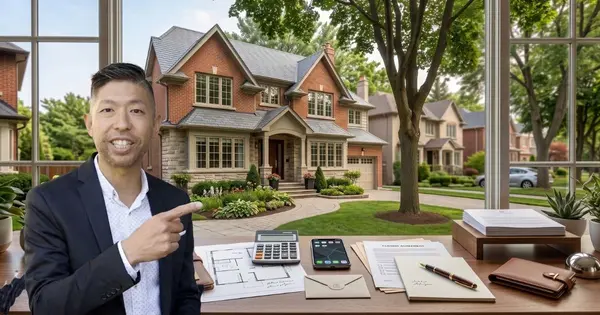
Selling a Home You Have Owned for 20+ Years: Downsizing in Richmond Hill
You have lived in this home for two decades or more. You raised your family here. You know every creak in the floor, every draft near the back door, every neighbour by name. Selling it is not just a transaction. It is the end of a chapter. This guide is for Richmond Hill homeowners who have owned their home for 20+ years and are preparing to sell. The process is different from selling a home you bought five years ago. The emotional weight is heavier, the preparation is more involved, the pricing requires a different approach and the stakes feel higher because this home represents a lifetime of investment. I walk you through what to expect, how to prepare, how to price accurately and how to manage the emotional side so the process feels controlled rather than overwhelming.
Quick takeaway: Selling a home you have owned for 20+ years is different because the home has appreciated significantly (often 3x to 5x original purchase price in Richmond Hill), the finishes and systems are older than the current market expects, the emotional attachment is deeper and the preparation process takes longer. The key is pricing based on what the home is worth today (not what you think it should be worth), investing in targeted preparation that generates a return, marketing to the right buyer pool and managing the timeline so the process is controlled and unhurried. Every long-held home I sell follows this framework. The results are consistently strong because the approach is built for properties with this specific profile.
Table of Contents
Why Long-Held Homes Are Different
Click each point to understand why selling after 20+ years requires a different approach.
Key Difference Significant Appreciation CLICK TO EXPAND
A home purchased in Richmond Hill in the early 2000s for $350,000 to $500,000 may now be worth $1.2M to $1.8M+ depending on the neighbourhood, lot and condition. That appreciation represents your largest financial asset and the single biggest transaction of your life. Pricing it correctly is not about what you paid or what you feel it should be worth. It is about what a buyer will pay in the current market based on comparable sales evidence.
Key Difference Dated Finishes and Systems CLICK TO EXPAND
A kitchen that was modern in 2003 looks dated in 2026. Oak cabinets, laminate countertops, brass fixtures, floral wallpaper, carpet in the bedrooms and a bathroom that has not been updated in 20 years all signal "needs work" to today's buyer. The finishes that were standard when you moved in are now the finishes buyers budget to replace. This does not mean you need to renovate the entire home before selling. But it does mean the preparation strategy and the pricing strategy must account for the gap between what the home currently looks like and what the market expects.
Key Difference Aging Mechanical Systems CLICK TO EXPAND
The furnace, air conditioner, water heater, roof and windows in a 20+ year-old home are approaching or past their expected lifespan. Buyers (and their home inspectors) will flag these systems and either negotiate a price reduction or walk away. Addressing the most critical systems before listing or pricing to reflect their condition is part of the strategy. Pretending they are not an issue is not.
Key Difference Decades of Accumulated Belongings CLICK TO EXPAND
Twenty years of living fills a home in ways that five years does not. Every closet, every drawer, the basement, the garage, the attic. The volume of belongings that needs to be sorted, donated, sold or discarded before staging and showing is significantly larger than in a shorter-held home. This is the most time-consuming part of the preparation and the most emotionally demanding. My decluttering guide covers the process and local resources.
Key Difference Deeper Emotional Attachment CLICK TO EXPAND
You raised your children in this home. You celebrated holidays, weathered difficult years and built a life within these walls. Selling a home after 20+ years is not the same as selling an investment property or a starter home you lived in for three years. The emotional weight is real and it deserves acknowledgment. The best agents do not rush you through it. They give you the time you need while providing the structure and support to keep the process moving forward at a pace that feels right.
Pricing a Home You Have Owned for Decades
Pricing long-held homes requires a different lens. Click each principle.
What You Paid Is Irrelevant to the Pricing Decision +
Your purchase price in 2001 or 2005 has no bearing on what the home is worth in 2026. The market does not care what you paid. It cares about what comparable homes have sold for recently. Anchoring to your original purchase price (even subconsciously) distorts your expectations. I provide a comparable analysis based on recent sales of similar homes in your neighbourhood so the pricing recommendation is grounded in current data, not historical nostalgia.
Condition Affects Price More Than You Think +
Two homes on the same street, same model, same lot size, can sell $100,000 to $200,000 apart based on condition. A home with an updated kitchen, modern bathrooms, newer flooring and well-maintained systems sells for significantly more than an identical home with original finishes from 2003. I assess your home's condition relative to comparable sales and advise on which updates generate a return and which do not.
The Land Is Often Worth More Than the Building +
For detached homes in established Richmond Hill neighbourhoods, the land component of the value has grown dramatically over 20+ years while the building has depreciated. A home on a premium lot (wide frontage, deep lot, ravine backing, cul-de-sac) may command a significant premium regardless of the building's condition because the lot itself is the asset. I assess lot value separately from building value to ensure the pricing captures the full picture.
Price for What the Home Is Today, Not What It Could Be +
Sellers of long-held homes sometimes price based on what the home would be worth if it were fully renovated. But buyers do not pay for potential. They pay for current condition minus the cost to renovate. If a renovated comparable sold for $1.6M and your home needs $150,000 in updates, the market value is closer to $1.4M to $1.45M, not $1.6M. I help you see the home through the buyer's eyes so the pricing is accurate and the home sells rather than sitting.
Pre-Listing Preparation
Preparing a 20+ year home for sale takes longer and requires more decisions than a newer home. Click each area.
Decluttering: Start 2 to 3 Months Early +
This is the biggest and most emotional task. Twenty years of belongings cannot be sorted in a weekend. Start with the rooms you use least (guest bedrooms, basement, garage, attic). Use the four-category system: keep, sell, donate, discard. Hire an estate sale company for items of value. Use local donation services for the rest. Accept help from family or professional organizers. Do not try to do it alone or all at once.
What to Update and What to Leave +
Not every dated feature needs to be updated before listing. I advise on which updates generate a return based on your specific home and its comparable competition. In general: fresh paint (neutral tones, entire main floor at minimum), professional cleaning (including carpets, windows, grout), updated light fixtures (a few hundred dollars for a modern look), decluttered and staged rooms (professional staging), and curb appeal (landscaping, front door, driveway). A full kitchen or bathroom renovation may or may not make sense depending on the scope, cost and how it positions the home relative to comparable sales. I run the numbers before advising.
Address the Obvious Maintenance Items +
Dripping faucets, cracked caulking, squeaky doors, burned-out light bulbs, stained ceiling tiles, peeling paint on the deck, cracked outlet covers. These are small items but they accumulate into a negative impression. A buyer who sees 20 minor maintenance issues starts wondering what major issues are hiding behind the walls. Address the visible maintenance items before listing. The cost is minimal. The impact on buyer perception is significant.
Professional Staging +
Staging is not optional for a 20+ year home. The furniture and decor that worked for your family for two decades may not present the home in the best light for today's buyer. Professional staging creates a visual standard in the listing photos that helps buyers see the home's potential rather than its age. I coordinate staging for every listing and the stager works with your existing furniture where possible, supplementing with rental pieces to create a cohesive, modern presentation.
Pre-Listing Home Inspection (Optional but Smart) +
For a 20+ year home, a pre-listing home inspection can be a strategic advantage. It identifies issues before the buyer's inspector does, giving you the choice to repair, disclose or price accordingly. It removes the element of surprise from the negotiation and signals to buyers that you are transparent about the home's condition. The cost ($400 to $600) is a small investment for the control it provides.
Marketing to the Right Buyer
Long-held homes attract specific buyer types. Click each marketing approach.
Lead with Lot and Location, Not Finishes +
The buyer for a 20+ year home is often buying the lot, the location, the school catchment and the neighbourhood rather than the interior finishes. The marketing leads with what cannot be changed (the lot, the street, the neighbourhood, the proximity to schools and transit) because those are the permanent assets. The finishes are temporary and the buyer knows they can update them.
Photography That Shows Potential +
Professional photography with attention to natural light, room flow and spatial scale shows buyers what the home offers beyond its current finishes. A well-staged, well-photographed 20-year home can generate strong interest if the buyer can see the bones, the layout, the lot and the neighbourhood through the photos. Drone photography showing the lot size, the mature landscaping and the neighbourhood context adds a layer that ground-level photos cannot provide.
Target the Renovation Buyer +
A significant portion of the buyer pool for long-held homes is the renovation buyer: someone who wants to purchase at a lower price point relative to renovated comparables and customize the home to their own taste. These buyers are actively looking for well-maintained but dated homes in good neighbourhoods. They are not discouraged by original finishes. They are excited by them because it means they get the lot and location they want at a price they can afford. I target these buyers through listing copy that positions the home as a renovation opportunity in a premium location.
Legal and Tax Considerations
Click each item to understand what applies to long-held properties.
Principal Residence Exemption +
If this has been your principal residence for the entire period of ownership, the sale is exempt from capital gains tax under the principal residence exemption. No tax on the gain. Your accountant should confirm the exemption applies and handle any CRA reporting requirements. If you owned other properties (a cottage, a rental, an investment property) during any year of ownership, the exemption may need to be allocated. Confirm with your accountant before closing.
Renovations Without Permits +
Over 20+ years, you may have completed renovations that required building permits but were done without them. A finished basement, a bathroom addition, structural changes, electrical upgrades or a deck. Unpermitted work can become an issue during the sale if the buyer's lawyer discovers discrepancies between the municipal records and the actual home. I advise on how to disclose and address unpermitted work before listing so it does not derail a sale at the negotiation stage.
Title and Survey Issues +
Over two decades, encroachments (a fence, a shed, a driveway that crosses the property line) and easement issues may have developed without being formally resolved. Your lawyer should review the title and any available survey before listing. Title insurance provides a layer of protection for the buyer but known issues should be disclosed and addressed proactively.
Timeline Expectations
Plan for a Longer Process
A 20+ year home typically takes 3 to 6 months from first conversation to closing.
Month 1 to 2: Decluttering, sorting, donating, discarding. Start with the rooms you use least. Accept help.
Month 2 to 3: Targeted updates (paint, fixtures, cleaning, minor repairs). Staging and photography. Legal and financial preparation.
Month 3 to 4: Listing, showings, offers, negotiation.
Month 4 to 6: Conditional period, closing, moving.
A Client Story: "It Has Never Looked This Good"
I worked with a couple in their late sixties who had owned their Richmond Hill home for 28 years. They raised three children there. Every room held memories. The idea of selling was overwhelming, not because they did not want to move, but because they could not imagine how to get from where they were to where they wanted to be.
The home had original everything. The kitchen, the bathrooms, the flooring, the light fixtures. It was well-maintained but it looked like 1998 because it was 1998. The basement was full. The garage was full. Every closet was full.
We started with a conversation. No pressure, no timeline, just an honest assessment of what the home was worth, what the options looked like and what the process would involve. Two months later, they were ready.
We spent six weeks on preparation. A professional organizer helped them sort through the basement and garage. Their children came on two weekends to help pack items they wanted to keep. An estate sale company handled the rest. A painter did the entire main floor and all the bedrooms. We replaced the light fixtures, updated the cabinet hardware in the kitchen, had the carpets professionally cleaned and staged the main rooms.
On listing day, the wife walked through the home and said: "It has never looked this good. Not even when we moved in."
The home sold in 17 days at a price that reflected both the lot's value and the care that went into preparation. They moved into a condo that same month. Three months later, she told me: "We should have done this five years ago."
Recognition
Kirby Chan Awards and Achievements
🏆 #1 Individual Producer in Ontario for eXp Realty 2023
🏆 Top 3 Best Rated Real Estate Agent in Richmond Hill
🏆 Toronto Star Platinum Award for Best Real Estate Agent
🏆 Top Real Estate Agent Award in Markham
🏆 2X ICON Agent Award with eXp Realty
🏆 2025 Community Votes Platinum Award, Thornhill
🏆 2024 Community Votes Platinum Award, Thornhill
🏆 2025 Gold Award for Real Estate Brokers in Markham
🏆 2024 Community Votes Bronze Award, Richmond Hill
🏆 2023 Community Votes Platinum Award, Thornhill
Frequently Asked Questions
Should I renovate the kitchen before selling?
It depends on the scope, cost and how your home compares to recent sales. A targeted refresh (paint cabinets, new hardware, update countertop, modern fixtures) may cost $5,000 to $15,000 and generate a strong return. A full gut renovation ($40,000+) may not return its cost. I run the numbers on comparable sales to advise whether to update, refresh or price accordingly.
How long does it take to prepare a 20+ year home for sale?
Plan for 6 to 10 weeks of preparation time. Decluttering takes the longest (2 to 4 weeks if you start early). Paint, cleaning, minor repairs and staging add another 2 to 4 weeks. Starting early and tackling one room at a time makes it manageable.
Will buyers care about dated finishes?
Yes. Dated finishes are the primary reason long-held homes sell below renovated comparables. But many buyers specifically seek out well-maintained dated homes in good neighbourhoods because the price is lower and they can customize to their own taste. The key is pricing honestly for the condition and marketing to the renovation buyer who sees opportunity rather than problems.
Do I owe tax on the sale?
If the home has been your principal residence for the entire ownership period, the gain is exempt from capital gains tax. If you owned other properties during any year of ownership, the exemption may need to be allocated. Confirm with your accountant before closing.
What if I did renovations without permits?
Unpermitted work should be disclosed and addressed before listing. Options include obtaining retroactive permits (where possible), disclosing the work in the listing, or adjusting the price to reflect the risk. I advise on the best approach for your specific situation so it does not become a negotiation problem after you have accepted an offer.
Who can help me sell a home I have owned for 20+ years?
Kirby Chan and the Kirby Chan & Co. Real Estate Team specialize in selling long-held Richmond Hill homes. I provide honest pricing based on current comparable data, coordinate the entire preparation process (decluttering, paint, staging, photography), market to the right buyer pool and manage the sale through to closing. The process is built for properties with this profile and the results are consistently strong. Reach me at (416) 305-8008.
Contact Kirby Chan
Thinking About Selling Your Long-Held Home?
The home that served you for 20+ years deserves a sale process that respects its history while maximizing its value. That starts with an honest assessment of what the home is worth today, a preparation plan that targets the updates that matter and a marketing strategy that reaches the right buyer.
Book a consultation with me to get a no-obligation home valuation, walk through the preparation process and understand what your home is worth in the current market.
Kirby Chan | Kirby Chan & Co. Real Estate Team
416-305-8008
info@kirbychanandco.com
https://kirbychanandco.com
Note: Pricing, preparation recommendations and market conditions vary by specific property, neighbourhood and timing. Tax treatment depends on individual circumstances and ownership history. This guide is for general information only. For advice specific to your situation, consult a licensed real estate professional, a qualified accountant and a real estate lawyer.