Aging in Place in Richmond Hill & Markham | Home Guide
Aging in Place in Richmond Hill and Markham: How to Make Your Home Work for the Next 20 Years
Most people want to stay in their home as they age. The neighbourhood is familiar. The community is built. The memories are there. But the home itself may not be designed for it. Stairs become dangerous. Bathrooms become hazardous. Doorways become too narrow. The question is not whether you want to age in place. It is whether your home can support it safely, and what it costs to make that happen. This guide covers the modifications that matter, what they cost, what tax credits and grants are available, which Richmond Hill and Markham neighbourhoods are best suited for aging in place, and how to evaluate a home's long-term livability before you buy or decide to stay.
Quick takeaway: A comprehensive aging-in-place renovation (barrier-free bathroom, main-floor bedroom, grab bars, wider doorways, improved lighting and non-slip flooring) costs $15,000 to $80,000 depending on scope. That is 1 to 2 years of assisted living costs ($4,000 to $7,000/month in Ontario). The federal Home Accessibility Tax Credit provides up to $1,500 in tax savings per year on eligible modifications. York Region and Ontario also offer programs for eligible seniors. In Richmond Hill and Markham, homes with main-floor bedrooms, walkout basements and single-level living options are the most adaptable for aging. If you are over 55 and plan to stay in your home for the next 10 to 20 years, the time to evaluate and plan is now, not after a fall or health crisis forces emergency decisions.
Table of Contents
- Why Aging in Place Matters in York Region
- The Bathroom: Where Most Injuries Happen
- Main-Floor Living: The Most Important Modification
- Doorways, Hallways and Mobility Access
- Lighting, Flooring and Fall Prevention
- Smart Home Technology for Aging Safely
- Complete Cost Guide by Modification
- Tax Credits, Grants and Financial Assistance
- Best Neighbourhoods for Aging in Place
- What to Look for When Buying a Home You Plan to Age In
- Frequently Asked Questions
Why Aging in Place Matters in York Region
York Region's population is aging. The 65+ demographic is the fastest-growing age group in the region and is projected to more than double by 2041. Richmond Hill and Markham have established communities where families have lived for 20 to 30+ years. The children have moved out. The mortgage is paid or nearly paid. The neighbourhood relationships are deep. Moving to a retirement residence or assisted living facility means leaving all of that behind.
The financial math also favours staying. Assisted living in Ontario costs $4,000 to $7,000/month ($48,000 to $84,000/year). A comprehensive aging-in-place renovation costs $15,000 to $80,000 as a one-time investment. Even at the high end, the renovation pays for itself in 1 to 2 years compared to facility costs. After that, you are living in a home you own, in a community you know, with equity that continues to grow.
The challenge is that most York Region homes were not built for aging. Two-storey designs with bedrooms upstairs, bathrooms with tubs and no grab bars, narrow doorways, poor lighting and uneven flooring create fall risks that increase dramatically after age 65. Falls are the leading cause of injury-related hospitalizations for Canadian seniors. The modifications described in this guide address the most common hazards and make it possible to live safely and independently for decades longer.
The Bathroom: Where Most Injuries Happen
The bathroom is the highest-risk room in the home for seniors. Wet surfaces, tight spaces, stepping over tub walls and reaching for fixtures create the conditions for the falls that most commonly result in hospitalization. Bathroom modifications should be the first priority in any aging-in-place plan.
Barrier-free shower. Replace the bathtub with a curbless (zero-threshold) walk-in shower with a built-in bench, hand-held shower head and non-slip tile. This eliminates the step-over that causes the most falls. Cost: $5,000 to $15,000 including demolition, plumbing, tile and fixtures.
Grab bars. Install hospital-grade grab bars beside the toilet, inside the shower and at the bathroom entrance. These should be anchored into wall studs, not just drywall. Modern grab bars come in finishes that match bathroom fixtures and do not look institutional. Cost: $200 to $800 for professional installation of 3 to 4 bars.
Comfort-height toilet. A taller toilet (17 to 19 inches versus the standard 15 inches) reduces the strain of sitting and standing. Cost: $300 to $600 for the toilet plus installation.
Non-slip flooring. Replace smooth tile with textured, non-slip tile or luxury vinyl with anti-slip properties. Cost: $1,500 to $4,000 for a full bathroom.
Lever-style faucets. Replace twist-handle faucets with single-lever or touchless faucets. Arthritis makes gripping and turning difficult. Cost: $200 to $500 per fixture.
Main-Floor Living: The Most Important Modification
The single most impactful aging-in-place modification is creating the ability to live entirely on the main floor. This means a bedroom, a full bathroom, a kitchen and a living area all accessible without stairs. For seniors who develop mobility limitations, stairs become the barrier that forces a move to assisted living.
Main-floor bedroom conversion. Convert a den, dining room or flex room into a bedroom. This may require adding a closet and adjusting the layout for privacy. Cost: $5,000 to $15,000. Many newer Richmond Hill and Markham homes already have a main-floor den or flex room that can serve this purpose with minimal modification.
Main-floor bathroom addition. If the home does not have a full bathroom on the main floor, adding one is the most important (and most expensive) modification. This requires plumbing, electrical, framing and finishing work. Cost: $15,000 to $40,000 depending on location and scope. If a powder room already exists on the main floor, converting it to a full bathroom (adding a shower) costs $8,000 to $20,000.
Stairlift. If main-floor living is not possible, a stairlift provides powered access to upper floors. Straight stairlifts cost $3,000 to $6,000. Curved stairlifts (custom-built for turns or landings) cost $8,000 to $15,000. Stairlifts are a bridge solution, not a long-term replacement for main-floor accessibility.
Residential elevator. For homes with the space, a residential elevator provides full multi-floor access. Cost: $30,000 to $60,000+ including construction. Most practical in homes with stacked closets or utility spaces that can be converted to a shaft. This is the luxury-tier solution but the most effective for long-term aging in place in a multi-storey home.
Doorways, Hallways and Mobility Access
Wider doorways. Standard interior doorways are 30 to 32 inches wide. A wheelchair or walker requires 36 inches minimum (32 inches absolute minimum for a walker). Widening doorways costs $500 to $1,500 per opening. Offset hinges can add 2 inches of clearance without full reframing, at $50 to $100 per door.
Lever door handles. Replace round doorknobs with lever-style handles throughout the home. Round knobs require grip strength that diminishes with arthritis. Cost: $30 to $80 per handle, DIY installation.
Ramp at entrance. A step-free entrance eliminates the most common barrier to entering and leaving the home. A permanent ramp (concrete or aluminum) costs $1,500 to $8,000 depending on height and length. A portable aluminum ramp costs $200 to $1,000. In Richmond Hill and Markham, homes with grade-level garage entries can provide step-free access through the garage without a ramp.
Hallway handrails. Continuous handrails along hallways provide support for balance-impaired residents. Cost: $500 to $2,000 for a typical home, professionally installed and anchored into studs.
Lighting, Flooring and Fall Prevention
Increased lighting throughout. Aging eyes need 2 to 3 times more light than younger eyes to see the same level of detail. Replace all bulbs with high-output LEDs (minimum 3000K, 800+ lumens per fixture). Add under-cabinet lighting in the kitchen, motion-sensor night lights in hallways and bathrooms and task lighting at reading and work areas. Cost: $500 to $2,000 for a full home upgrade.
Motion-sensor pathway lighting. Install motion-activated LED strip lighting along the path from the bedroom to the bathroom. This is the highest-value fall prevention investment for nighttime trips. Cost: $100 to $500.
Non-slip flooring. Remove scatter rugs (the number one tripping hazard in senior homes). Replace smooth hardwood or tile in high-traffic areas with textured LVP or anti-slip treatments. Ensure all transitions between flooring types are flush (no raised thresholds). Cost: $2,000 to $8,000 depending on scope.
Stair visibility. If stairs remain in use, add contrasting colour strips to the edge of each step (making the edge clearly visible), ensure the stairway is fully lit and install handrails on both sides. Cost: $200 to $800.
Smart Home Technology for Aging Safely
Technology has made aging in place significantly safer and more practical than it was even five years ago.
Medical alert systems. Wearable devices (pendant or wristband) that connect to emergency services with the press of a button. Modern systems include fall detection that automatically alerts responders if a fall is detected. Cost: $30 to $60/month for monitored service.
Smart stove monitoring. Devices that automatically shut off the stove if left unattended for a set period. Stove fires are a leading cause of residential fire for seniors. Cost: $300 to $800.
Video doorbell and smart locks. Allow seniors to see and communicate with visitors without walking to the door. Smart locks eliminate the need to manage physical keys. Cost: $200 to $500.
Voice-activated controls. Smart speakers (Amazon Echo, Google Home) can control lights, thermostats, locks and entertainment systems through voice commands, eliminating the need to reach switches or walk to controls. Cost: $50 to $200 per device.
Smart thermostat. Programmable thermostats maintain consistent temperature without manual adjustment. This matters for seniors with circulation or temperature regulation issues. Cost: $200 to $400.
Tax Credits, Grants and Financial Assistance
Home Accessibility Tax Credit (HATC). A federal non-refundable tax credit for permanent modifications that improve accessibility for seniors (65+) or persons with disabilities. Claim up to $20,000 in eligible expenses per year for a maximum tax reduction of approximately $1,500. Eligible expenses include grab bars, walk-in showers, ramps, wider doorways, stairlifts and other permanent accessibility features.
Medical Expense Tax Credit (METC). Some accessibility renovations may also qualify as medical expenses if they accommodate a specific disability. You can claim both the HATC and METC for the same expense if it qualifies under both. Keep all receipts and documentation.
Ontario Renovates Program. Provides forgivable loans or grants for low-income seniors who need essential accessibility modifications. Eligibility is income-based and funds are limited (often first-come, first-served). Contact York Region's housing services for availability.
March of Dimes Home and Vehicle Modification Program. Provides funding for modifications that improve accessibility for persons with disabilities. Applications are assessed individually based on need.
Property Tax Exemption for Accessibility Modifications. A tax exemption of up to 10% may be available for a portion of a residential property that has been built or altered to accommodate a senior or person with a disability. Contact your municipality and MPAC for details.
Best Neighbourhoods for Aging in Place
Richmond Hill
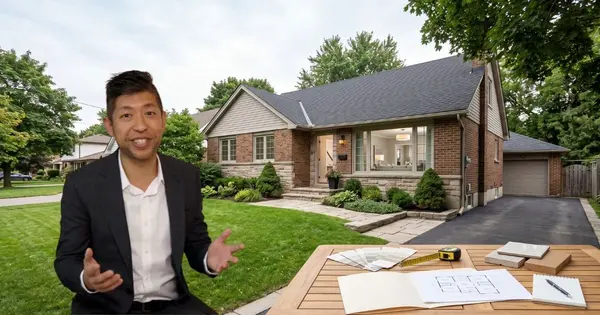
Langstaff has 1960s-70s bungalows and side-splits that offer single-level or near-single-level living. These homes are among the most affordable detached options in Richmond Hill ($1M to $1.2M) and their floor plans are naturally suited to aging in place. Proximity to Langstaff GO and the future Yonge North Subway means transit access without driving. Mill Pond offers heritage homes near Richmond Hill Centre with walkable access to shops, the library, the community centre and medical offices along Yonge Street. Oak Ridges has newer bungalows and homes with main-floor master suites, plus the community centre, lake access and trail system that support an active lifestyle for older adults.
Markham
Unionville is the most walkable neighbourhood in Markham with Main Street shops, restaurants, Toogood Pond and GO station access. Seniors who stop driving can maintain independence here more easily than in most suburban neighbourhoods. Milliken has affordable detached bungalows and side-splits from the 1970s-80s with floor plans suited to main-floor living. Medical services, groceries and transit are accessible. Cornell has newer construction with modern floor plans including main-floor flex rooms that convert easily to bedrooms. Proximity to Markham Stouffville Hospital is a practical advantage for aging residents.
What to Look for When Buying a Home You Plan to Age In
If you are over 50 and buying what may be your final home, evaluate it through an aging-in-place lens, not just a current-needs lens. The features that make a home age-friendly are not the same ones that make it attractive at an open house. Look for a main-floor bedroom or a room that can easily convert to one. Look for a full bathroom on the main floor or the plumbing and space to add one. Look for a step-free entry or the potential to add a ramp. Look for wider-than-standard doorways (36 inches). Look for a single-storey layout or a home where the main floor can function independently. Look for proximity to medical services, transit and daily amenities within a short drive. Look for a neighbourhood with sidewalks, gentle grades and community infrastructure.
At Kirby Chan & Co., when clients tell us they are buying their "forever home," we evaluate properties through this lens alongside the standard criteria. A beautiful two-storey with all bedrooms upstairs and no main-floor bathroom may work for the next 10 years but become a problem at 75. The right home is one that works for you today and can be adapted affordably for the next 20 years.
Recognition
Kirby Chan Awards and Achievements
🏆 #1 Individual Producer in Ontario for eXp Realty 2023
🏆 Top 3 Best Rated Real Estate Agent in Richmond Hill
🏆 Toronto Star Platinum Award for Best Real Estate Agent
🏆 Top Real Estate Agent Award in Markham
🏆 2X ICON Agent Award with eXp Realty
🏆 2025 Community Votes Platinum Award, Thornhill
🏆 2024 Community Votes Platinum Award, Thornhill
🏆 2025 Gold Award for Real Estate Brokers in Markham
🏆 2024 Community Votes Bronze Award, Richmond Hill
🏆 2023 Community Votes Platinum Award, Thornhill
Frequently Asked Questions
How much does it cost to modify a home for aging in place?
A basic safety package (grab bars, lighting, lever handles, motion sensors) costs $1,500 to $5,000. A comprehensive renovation (barrier-free bathroom, main-floor bedroom, non-slip flooring, wider doorways) costs $30,000 to $80,000. Both are a fraction of one year of assisted living ($48,000 to $84,000/year in Ontario).
What is the most important aging-in-place modification?
Creating the ability to live entirely on the main floor (bedroom, full bathroom, kitchen, living area without stairs). After that, converting the bathroom to a barrier-free design with a walk-in shower, grab bars and non-slip flooring addresses the highest-risk area in the home.
Are there tax credits for aging-in-place renovations?
Yes. The federal Home Accessibility Tax Credit allows you to claim up to $20,000 in eligible expenses per year for a maximum tax reduction of approximately $1,500. Some modifications may also qualify under the Medical Expense Tax Credit. Ontario has offered additional programs including the Ontario Renovates Program for eligible low-income seniors.
Do aging-in-place modifications affect resale value?
Most modifications either maintain or increase resale value. A barrier-free bathroom, main-floor bedroom and wider doorways appeal to aging buyers (the fastest-growing demographic), multigenerational families and persons with disabilities. Highly specialized modifications (residential elevators, institutional-looking features) may narrow the buyer pool slightly but can be marketed as premium features.
Which Richmond Hill and Markham neighbourhoods are best for aging in place?
Langstaff (bungalows, GO access, affordable), Mill Pond (walkable to shops and services), Oak Ridges (newer bungalows, community centre, trails) in Richmond Hill. Unionville (walkable Main Street, GO), Milliken (affordable bungalows, medical access) and Cornell (modern layouts, hospital proximity) in Markham.
When should I start planning aging-in-place modifications?
At 55 to 60, while you are healthy and can make decisions without urgency. Planning proactively gives you time to budget, choose contractors and complete work on your timeline. Waiting until after a fall or health crisis means making emergency decisions under stress, often at higher cost and with worse outcomes.
Who can help me find a home suited for aging in place?
Kirby Chan & Co. Real Estate Team evaluate homes through an aging-in-place lens for clients who are buying their long-term home. From identifying properties with main-floor living potential to assessing modification costs and neighbourhood walkability, the team helps you find a home that works for the next 20 years, not just the next 5.
Contact Kirby ChanPlanning to Stay in Your Home Long-Term?
The best time to plan for aging in place is before you need to. Whether you are modifying your current home or buying one that will work for the next two decades, understanding which features matter, what they cost and which homes already have them saves money and prevents the crisis-driven decisions that lead to unnecessary moves.
Book a consultation with Kirby Chan to discuss your long-term housing plan, evaluate your current home's aging potential or search for a home designed for the next chapter.
Kirby Chan | Kirby Chan & Co. Real Estate Team
416-305-8008
info@kirbychanandco.com
https://kirbychanandco.com
Note: This guide is for general information purposes only. Modification costs are estimates and vary by contractor, scope of work and existing home conditions. Tax credits and grant programs have eligibility requirements and may change. Consult a licensed contractor for renovation quotes, an accountant for tax credit eligibility and your municipality for grant availability. For medical or occupational therapy assessments of home safety, consult a licensed occupational therapist.
Categories
Recent Posts