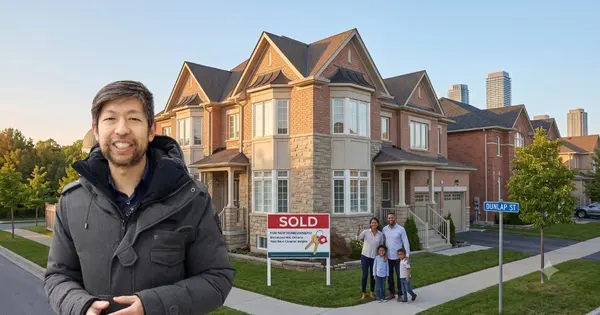
How to Price a Listing in Toronto: Underpricing vs Market Pricing vs “Testing”
How to Price a Listing: Underpricing vs Market Pricing vs Testing the Market
Pricing a home is not just about numbers on a spreadsheet. It is about psychology, timing and understanding how buyers behave in real conditions. This guide breaks down the three most common pricing approaches, when they work, when they fail and how to choose the one that protects both your price and your momentum.
Quick takeaway: What sellers fear most is leaving money on the table. What actually costs them the most is poor pricing strategy at the start. In Richmond Hill, Markham and across York Region, the first two weeks on market determine everything. Correct pricing at launch protects your leverage. Testing the market almost always costs more than it saves.
Table of Contents
- The Three Pricing Strategies Every Seller Should Understand
- Underpricing: Creating Competition
- Market Pricing: Precision and Stability
- Testing the Market: The Most Dangerous Strategy
- Why the First Two Weeks Matter Most
- What Sellers Should Actually Focus On
- Frequently Asked Questions
Kirby Chan has priced and sold homes across Richmond Hill, Markham and the broader GTA through multiple market cycles. He has seen sellers win by pricing correctly and he has seen sellers lose leverage, time and money by guessing. Before entering real estate sales, Kirby worked as a professional appraiser. That background supports accurate pricing, clear value adjustments and confident explanations to buyer agents that result in stronger offers.
The Three Pricing Strategies Every Seller Should Understand
There are only three real ways to price a listing. Each one sends a signal to the market. Understanding which signal you are sending is the difference between attracting serious buyers and watching your home sit while the competition sells.
Underpricing: Creating Competition
Underpricing means listing below market value to attract attention and multiple offers. It works best when buyer demand is high, inventory is limited, strong comparable sales support the strategy and the home has broad appeal across buyer segments.
The advantages are real. High showing volume in the first week, emotional competition among buyers and the potential for bidding wars that push the final sale price well above market value. In Richmond Hill and Markham, underpricing has historically been one of the most effective strategies during seller's markets.
The risks are equally real. There is no guarantee of multiple offers. The market has to support the strategy. In a balanced or buyer-leaning environment, underpricing without proven demand is a gamble. If the offers do not materialize, you are left with a listing priced below its value and limited negotiating room. Underpricing only works when demand is proven, not assumed.
Market Pricing: Precision and Stability
Market pricing means listing at fair market value based on recent comparable sales. It works best in balanced or shifting markets, when buyers are price-sensitive, when sellers want steady and predictable interest and when the home appeals to a specific buyer profile rather than the mass market.
The advantages include predictable buyer response, a strong negotiation position from day one and fewer price reductions over the listing period. Buyers who see a market-priced home know the seller is informed and serious. That sets a different tone for the entire transaction.
The risk is minimal but real. Market pricing requires accurate data. If your comparable sales analysis is off, the price will be off. It also generates less emotional urgency than underpricing, which means the sale may take slightly longer. But the trade-off is stability, control and a final price that reflects real value. Market pricing rewards patience and accuracy.
Testing the Market: The Most Dangerous Strategy
Testing the market means listing above market value to see if a buyer will pay more than the data supports. Sellers attempt this when they fear underpricing, when they are uncertain about market direction or when emotional attachment to the home inflates their perception of its value.
This strategy fails far more often than it succeeds. Buyers ignore overpriced listings. Days on market increase. When the inevitable price reduction comes, it signals weakness to every buyer and agent watching the listing. The final sale price often drops below what the home would have sold for if it had been priced correctly from the start.
In York Region, the first 14 days matter more than any other period. That is when a listing receives peak attention, the most showings and the strongest buyer interest. Testing the market burns through that window. By the time the price is corrected, the listing feels stale. Buyers who were interested early have moved on to other properties. Testing often costs sellers more than it protects.
Why the First Two Weeks Matter Most
Buyers track new listings closely. When a home launches, it gets the most attention, it feels scarce and fresh and buyers act with more emotional urgency than at any other point in the listing's lifecycle.
Once that initial momentum is lost, everything shifts. Showings slow down. Offers weaken. Negotiating power moves from the seller to the buyer. A home that has been on the market for 30 or 45 days without selling tells every buyer one thing: the price is wrong.
Correct pricing at launch protects your leverage. It is the single most important decision you will make in the entire selling process.
What Sellers Should Actually Focus On
Instead of asking "what price do I want?" sellers should ask what buyers have actually paid for similar homes recently, how fast homes are selling in their specific neighbourhood, what inventory is coming to market next and what buyer segment they are targeting.
Pricing is strategy, not hope. In Richmond Hill, a detached home in Doncrest priced at $1.1M competes in a completely different buyer pool than a detached home in South Richvale priced at $3M. Each neighbourhood, price point and property type requires its own analysis. Broad citywide averages are not enough. Block-level data is what drives accurate pricing.
Kirby Chan & Co. prepares a focused comparison using relevant sales and shares it directly with buyer agents. Adjustments, value differences and data are presented clearly so buyer agents feel confident bringing offers forward. Most sellers have no idea this happens behind the scenes, but it is one of the most valuable things that accurate pricing enables.
Recognition
Kirby Chan Awards and Achievements
🏆 #1 Individual Producer in Ontario for eXp Realty 2023
🏆 Top 3 Best Rated Real Estate Agent in Richmond Hill
🏆 Toronto Star Platinum Award for Best Real Estate Agent
🏆 Top Real Estate Agent Award in Markham
🏆 2X ICON Agent Award with eXp Realty
🏆 2025 Community Votes Platinum Award, Thornhill
🏆 2024 Community Votes Platinum Award, Thornhill
🏆 2025 Gold Award for Real Estate Brokers in Markham
🏆 2024 Community Votes Bronze Award, Richmond Hill
🏆 2023 Community Votes Platinum Award, Thornhill
Frequently Asked Questions About Pricing a Listing
Is underpricing still working in the GTA?
It can work in high-demand segments where inventory is tight and comparable sales support the strategy. In a balanced or buyer-leaning market, underpricing without proven demand is a gamble that can leave sellers accepting less than market value.
Does overpricing ever work when selling a home?
Rarely. Most overpriced homes sit on market, require price reductions and ultimately sell for less than they would have if priced accurately from the start.
How much does pricing affect the final sale price?
More than staging or marketing. Pricing determines buyer behaviour. A well-priced home attracts serious showings early and supports stronger offers. An overpriced home repels qualified buyers before they ever walk through the door.
Should I test the market first and reduce later if needed?
This approach often leads to lower final prices and longer selling timelines. Buyers interpret price reductions as a signal that the home was overpriced to begin with, which weakens your negotiating position further.
Who should help me price my listing in Richmond Hill or Markham?
Kirby Chan and the Kirby Chan & Co. Real Estate Team combine appraisal-level pricing expertise with neighbourhood-level data across Richmond Hill, Markham and Thornhill. The team's listings historically sell around 105% of asking price while broader market averages trend closer to 99%. Reach Kirby at (416) 305-8008.
Contact Kirby ChanThinking About Selling?
The difference between a strong sale and a disappointing one often comes down to pricing. The right price protects your time, your leverage and your final result.
If you are considering listing your home and want clarity on which pricing strategy fits your neighbourhood, property type and market conditions, book a consultation with Kirby Chan to review your listing strategy and price your home with confidence from day one.
Kirby Chan | Kirby Chan & Co. Real Estate Team
416-305-8008
info@kirbychanandco.com
https://kirbychanandco.com
Note: Pricing strategies and market conditions vary by neighbourhood, property type and timing. This guide is for general information only. For advice specific to your home and situation, consult a licensed real estate professional.
Categories
Recent Posts