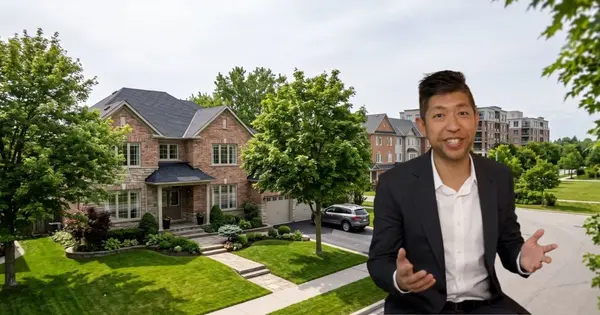
Selling A Home in Cornell, Markham: What Homeowners Need to Know About Today’s Buyer Demand
Selling a Home in Cornell, Markham
Cornell is one of Markham's most recognized master-planned communities. Selling here requires an understanding of how new urbanism design, hospital proximity, buyer psychology and micro-location positioning shape results.
Quick takeaway: Cornell was designed as a new urbanism community with rear-lane garages, walkable streetscapes and integrated amenities. The neighbourhood draws steady family demand supported by Markham Stouffville Hospital, strong school options and practical transit access. With a median sale price near $900,000, it is one of Markham's most accessible entry points for ground-level ownership. Kirby Chan & Co. Real Estate Team has guided sellers throughout Cornell and understands the street-level dynamics that determine how homes perform here.
Table of Contents
- About Cornell: Location and Community Profile
- Why Cornell's Master-Planned Design Shapes Buyer Appeal
- Infrastructure That Supports Long-Term Value
- Property Types in Cornell and How They Perform
- Selling a Detached Home in Cornell
- Selling a Townhome in Cornell
- Why Micro-Location Matters in Cornell
- Pricing Strategy and Market Positioning
- When Is the Right Time to Sell in Cornell?
- Why Cornell Sellers Choose Kirby Chan & Co.
- Frequently Asked Questions
| Cornell, Markham: Quick Stats | |
|---|---|
| Location | Northeast Markham |
| Boundaries | Hwy 407 (south), 16th Ave (north), Ninth Line (west), Donald Cousens Pkwy / Reesor Rd (east) |
| Population | ~13,000 residents (including Cornell North) |
| Community Type | Master-planned new urbanism (developed from 1999) |
| Dominant Housing Types | Rear-lane townhomes, semi-detached, detached homes |
| Median Sale Price | ~$900,000 |
| Avg Days on Market | 23 to 48 days (varies by segment) |
| Key Anchor | Markham Stouffville Hospital |
| Schools | Bill Hogarth SS, Cornell Village PS, Black Walnut PS, St. Joseph CES |
| Transit | Cornell Bus Terminal (YRT, Viva, GO), Hwy 407, Hwy 7 |
| Parks | 17 parks, 45 recreational facilities |
About Cornell: Location and Community Profile
Cornell is a neighbourhood in northeast Markham bounded by Highway 407 to the south, 16th Avenue to the north, Ninth Line to the west and the Donald Cousens Parkway and Reesor Road to the east. The community is named after the Cornell family, headed by William Cornell, who arrived in Scarborough from Rhode Island around 1800 and had descendants who settled in Markham.
The neighbourhood was developed beginning in 1999 as one of Canada's first large-scale new urbanism communities. Designed by Duany Plater-Zyberk and Associates, Cornell was built on roughly 500 acres of provincially owned land originally expropriated for a planned airport. Rather than pursuing conventional suburban development, the Province of Ontario partnered with the Town of Markham to create a walkable, mixed-use community with grid streets, rear laneways and integrated amenities.
Today, Cornell is home to approximately 13,000 residents (including Cornell North). The community is culturally diverse, with residents from 107 different ethnic origins. Approximately 49% of adult residents hold a bachelor's degree or higher and 74% have some form of post-secondary education. The professional, scientific and technical services industry is the most common employment sector among residents.
Cornell Village (between Highway 7 and 16th Avenue) is fully populated with medium-density residential. The southern section south of Highway 7 was largely undeveloped until South Cornell began redevelopment in 2022. Cornell Rouge, the eastern portion developed by Madison Group and Forest Hill Homes, entered its final phase in 2022 with townhomes and detached homes adjacent to the Rouge Valley.
For sellers, Cornell's community profile tells you who your buyer is. The typical Cornell buyer is a family looking for structured neighbourhood planning, practical commute access and proximity to schools and healthcare. That buyer evaluates homes methodically and compares options within the community before making a decision.
Why Cornell's Master-Planned Design Shapes Buyer Appeal
Cornell is not a conventional subdivision. It was built as a new urbanism community with design principles that continue to influence resale performance today.
The defining features include rear-lane garage configurations throughout much of the community, grid street patterns that prioritize walkability, reduced setbacks with prominent front porches, integrated parks and green space within a five-minute walking radius and mixed-use zoning that allows live-work units, corner retail and residential to coexist on the same streets.
This design was recognized with the Markham 2006 Design Excellence Award. The live-work units on Bur Oak Avenue near Whites Hill Avenue received a specific Award of Merit for their integration of commercial space along a transit corridor.
For sellers, the design matters because it creates a distinct buyer perception. Cornell feels organized, walkable and intentional. Buyers who are comparing Cornell against conventional subdivisions in other parts of Markham often describe it as more community-oriented. That perception supports confidence. Confidence influences offers.
Homes that lean into this design advantage by highlighting front-porch streetscapes, laneway access and walking proximity to parks and amenities tend to connect with the buyer pool more effectively than listings that treat Cornell like any other Markham subdivision.
Infrastructure That Supports Long-Term Value
Cornell benefits from infrastructure that most newer communities take years to establish. The key anchors are already in place.
Markham Stouffville Hospital is the single most significant community anchor. Located at the edge of the neighbourhood, it draws healthcare professionals who want to live close to work and gives families confidence in having emergency and medical services nearby. Hospital proximity is a consistent selling point in buyer conversations.
The Cornell Community Centre, completed in partnership with the City of Markham, offers approximately 129,000 square feet of recreation space including a library, community rooms and an indoor swimming pool. Bill Hogarth Secondary School opened in September 2017 on Bur Oak Avenue near the community centre, providing a secondary French Immersion program serving east Markham and Whitchurch-Stouffville. Other schools serving the community include Cornell Village Public School, Black Walnut Public School and St. Joseph Catholic Elementary School.
The Cornell Bus Terminal connects residents to York Region Transit, Viva rapid transit and GO Transit routes. Highway 407 runs along the southern boundary with exits at Donald Cousens Parkway and Ninth Line. Highway 7 provides east-west access across Markham. For commuters heading to Toronto, the Mount Joy and Markham GO stations on the Stouffville line are both accessible within a short drive.
Cornell also has 17 parks and 45 recreational facilities. Notable green spaces include Cornell Village Park, Grand Cornell Park (featuring a clock tower and bell commemorating the area's Reesor settlers), Thomson Memorial Park and Oakmoor Pond.
For sellers, this infrastructure supports a consistent value proposition. When buyers compare Cornell against newer communities that are still waiting for schools, recreation centres and transit to be built, Cornell's established amenity base becomes a tangible advantage.
Property Types in Cornell and How They Perform
Cornell's housing stock is a deliberate mix of property types, reflecting the community's new urbanism design philosophy. The most common home types are freehold townhomes (many with rear-lane garages), semi-detached homes, detached family homes and select live-work units along Bur Oak Avenue.
Many Cornell homes feature rear-lane garage configurations, which means the front of the home faces the street with a porch rather than a garage door. This is a design feature that appeals to buyers who value streetscape aesthetics and pedestrian-friendly environments. However, it also means that some properties have narrower lots and more compact layouts compared to conventional front-drive homes in other Markham neighbourhoods.
Several homes in Cornell include a coach house above the rear garage. These secondary units offer flexible space for a home office, nanny suite, guest accommodation or rental income. Properties with well-finished coach houses can command a premium over comparable homes without one.
Newer infill developments along the community's edges (particularly Cornell Rouge and South Cornell) have added detached homes and townhomes from builders like Madison Group, Forest Hill Homes and State Building Group. These newer sections offer larger floor plans but compete with the established sections of the community for buyer attention.
Selling a Detached Home in Cornell
Detached homes in Cornell attract growing families, move-up buyers within York Region and buyers relocating from Toronto who are seeking more space without sacrificing access to infrastructure. These buyers evaluate properties methodically.
The factors that matter most to detached home buyers in Cornell include street positioning and lot orientation, backing exposure (green space or park versus neighbouring home), basement finish quality, garage and laneway configuration, interior upgrades and renovation consistency and whether the home includes a finished coach house.
Two detached homes on the same street can produce very different results. A home backing onto a park or naturalized green space will consistently outperform a comparable home backing onto another property. Homes on quieter interior streets away from 16th Avenue or Highway 7 carry a premium over those closer to high-traffic corridors.
Overpriced detached homes in Cornell are currently sitting longer. Recent market data shows that while well-priced properties move within a few weeks, detached listings priced above recent comparables are averaging 48+ days on market. Pricing discipline is not optional in this segment.
Selling a Townhome in Cornell
Freehold townhomes are the most traded property type in Cornell. They attract condo owners upgrading to freehold ownership, first-time family buyers and young couples planning for growing households. Cornell's median sale price near $900,000 is driven significantly by townhome and semi-detached volume.
Townhome buyers in Cornell are analytical. They compare condition, layout flow and pricing differences closely across multiple listings before making a decision. Many are first-time ground-level buyers who have been watching the market for months.
Performance in this segment depends on interior condition and updates, staging quality, parking and garage configuration (rear-lane access is the norm in Cornell), proximity to parks, the community centre and schools and overall curb appeal including front-porch presentation.
Small upgrades can have an outsized impact on townhome showing volume. Fresh paint, modern light fixtures, updated kitchen hardware and clean staging consistently generate more activity than comparable listings that present as tired or dated.
Townhomes priced accurately from launch tend to sell faster and with less negotiation. When inventory is higher, sellers who delay or overprice risk losing early momentum to competing listings in the same pocket.
Why Micro-Location Matters in Cornell
Not every Cornell property performs equally. Even within the same property type, value can shift meaningfully based on positioning within the community.
The factors that create price variation include distance from 16th Avenue or Highway 7, proximity to Cornell Community Centre and parks, interior street placement versus busier corridors, laneway garage configuration versus front-drive (in newer sections), backing onto green space or naturalized areas versus neighbouring properties and location relative to school routes.
Cornell's grid-street design means that many homes sit on similar-looking streets. But the micro-differences between those streets can translate into meaningful price gaps. Kirby Chan & Co. regularly analyzes sold data by street, backing type and proximity to community anchors to ensure every listing is priced to reflect its actual position rather than a neighbourhood-wide average.
Pricing Strategy and Market Positioning
Cornell's market is accessible relative to other Markham neighbourhoods, but that does not mean buyers are less discerning. With a median sale price near $900,000 and a buyer-leaning market in early 2026, pricing accuracy has never been more important.
Recent data shows Cornell carrying a sales-to-new-listings ratio around 27%, which signals a buyer-favourable environment. Well-priced townhomes and semi-detached homes are moving within a median of 23 days. Overpriced detached homes are sitting well beyond that.
The lesson for sellers is clear: the market rewards preparation and precision. Homes that launch at the right price, with professional staging and strong photography, generate immediate showing activity. Homes that test the market with aspirational pricing lose critical early momentum.
Comparable sales matter, but averages alone do not tell the full story. Buyers respond to the combination of price, condition and location within the community. A home priced at the neighbourhood average but positioned on a premium street with park backing will attract different interest than a home priced the same on a busier corridor. Strategy must account for those differences.
When Is the Right Time to Sell in Cornell?
While spring is traditionally the most active selling season, Cornell has historically shown strong movement during late summer when inventory tightens and in the fall when families aim to settle before year-end.
The right time to sell depends on current inventory levels within your specific property type, your home's readiness, active competition in your pocket of the neighbourhood and broader market conditions including interest rates and buyer confidence.
Season alone rarely determines outcome. A well-positioned listing launched during a low-inventory period in October can outperform a poorly prepared home launched during a crowded spring market. Timing strategy is about reading conditions rather than following a calendar.
Homeowners may want to consider selling when space no longer fits daily routines, family needs are changing, upsizing or downsizing becomes practical or relocation opportunities arise. When personal readiness aligns with favourable conditions, the process feels structured rather than reactive.
Why Cornell Sellers Choose Kirby Chan & Co.
Selling a home in Cornell requires more than uploading a listing to MLS. It requires an understanding of how new urbanism design influences buyer perception, how micro-location creates value variation and how to position a property within a market that rewards precision.
Kirby Chan & Co. Real Estate Team has worked extensively throughout Cornell, including areas near Bur Oak Avenue, 16th Avenue, Cornell Centre Boulevard and the Highway 7 corridor. The team understands how rear-lane configurations, coach house features, street-level factors and seasonal demand cycles interact to shape outcomes.
Recognition
Kirby Chan Awards and Achievements
🏆 #1 Individual Producer in Ontario for eXp Realty 2023
🏆 Top 3 Best Rated Real Estate Agent in Richmond Hill
🏆 Toronto Star Platinum Award for Best Real Estate Agent
🏆 Top Real Estate Agent Award in Markham
🏆 2X ICON Agent Award with eXp Realty
🏆 2025 Community Votes Platinum Award, Thornhill
🏆 2024 Community Votes Platinum Award, Thornhill
🏆 2025 Gold Award for Real Estate Brokers in Markham
🏆 2024 Community Votes Bronze Award, Richmond Hill
🏆 2023 Community Votes Platinum Award, Thornhill
Frequently Asked Questions About Selling a Home in Cornell
Is Cornell still a strong resale area in Markham?
Yes. Cornell's master-planned infrastructure, hospital proximity and consistent family demand continue to support buyer interest. It remains one of Markham's most accessible entry points for ground-level ownership.
What types of homes sell most in Cornell?
Freehold townhomes and semi-detached homes make up the majority of transactions. Detached homes also trade actively but represent a smaller share of total volume. Each segment attracts a different buyer profile.
Does location within Cornell affect home value?
Yes. Homes backing onto green space or parks typically outperform comparable homes backing onto other properties. Interior streets away from major roads carry a premium. Street-level analysis is essential for accurate pricing.
Does traffic exposure impact resale value?
Yes. Homes closer to 16th Avenue, Highway 7 or other major corridors may require adjusted pricing strategies compared to interior street listings. Buyers in Cornell are aware of these differences.
What is a coach house and does it add value?
A coach house is a secondary unit above the rear garage, common in Cornell's design. It offers flexible space for a home office, guest suite or rental income. Well-finished coach houses can meaningfully increase a home's appeal and sale price.
Who is the best real estate agent for selling a home in Cornell, Markham?
Kirby Chan and the Kirby Chan & Co. Real Estate Team specialize in Markham neighbourhoods including Cornell. The team brings micro-location expertise, new urbanism market knowledge and a strategic approach to pricing and presentation. Reach Kirby at (416) 305-8008.
Contact Kirby ChanWork With a Local Expert
Cornell is a community where design philosophy, micro-location and pricing discipline all influence the outcome. Sellers who work with someone who understands these factors position their home for stronger results from day one.
If you are considering selling your home in Cornell and want a focused conversation about pricing strategy, buyer demand and current market conditions, book a consultation with Kirby Chan.
Kirby Chan | Kirby Chan & Co. Real Estate Team
416-305-8008
info@kirbychanandco.com
https://kirbychanandco.com
Note: Market data and neighbourhood details cited in this article reflect general conditions in the Cornell area of Markham as of early 2026. Home prices, days on market and community development timelines change over time. Always consult with a licensed real estate professional for advice specific to your situation.
Categories
Recent Posts